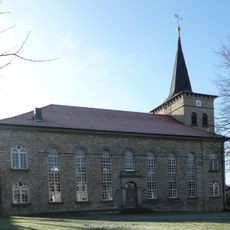
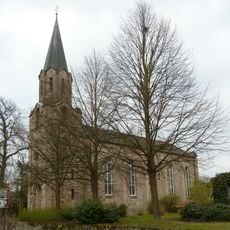
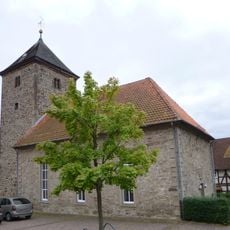
Schloss Jühnde, Castle in Jühnde, Germany
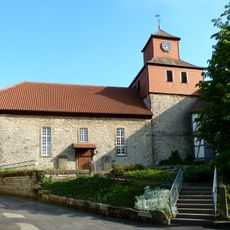
Schloss Jühnde is a castle in Jühnde, Germany, featuring a 29-meter tower called Moshus with cross-ribbed vaults in its lower two floors, showing medieval building techniques. The structure displays different construction phases from various periods.
A manor at Jühnde was first mentioned in a 960 charter of Otto I, while the castle itself appears in records in 1290, held by Widekindus dictus de June. After the von June family died out in 1463, the castle passed to the von Bovenden and then the von Adelebsen; it was taken by Göttingen in 1484 and rebuilt from 1489. Reichsfreiherr Otto Grote zu Schauen acquired the estate in 1664 and rebuilt the castle between 1668 and 1671.
The name Jühnde derives from Widekindus dictus de June, who held the castle first mentioned in 1290; the family died out in 1463. Since 1664 the complex has been lived in and farmed by the Freiherren Grote. In 1951 the archive of the writer Heinrich Sohnrey, born here in 1859, was set up in the Moshus tower.
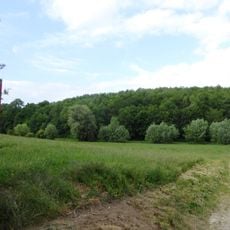
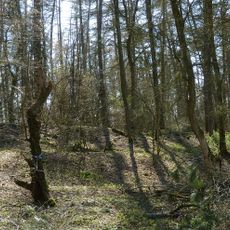
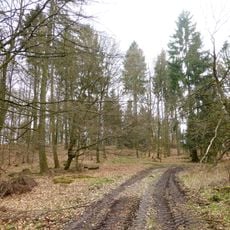
Schloss Jühnde stands in the village of Jühnde, and the Jühnder Warte, a stone tower of the medieval Göttingen Landwehr, rises about 200 metres to its south-east at the edge of a wooded slope. The sources record no opening times or visitor access for the privately used castle complex, so the tower and the grounds can only be viewed from outside.
During medieval times, the castle served as a base for robber knights who preyed on merchants traveling the trade route between Münden and Göttingen. These activities made the estate a feared name among traders in the region.
The community of curious travelers
AroundUs brings together thousands of curated places, local tips, and hidden gems, enriched daily by 94,530 contributors worldwide.