St. Sebastian, Gothic church in Limburg an der Lahn, Germany.
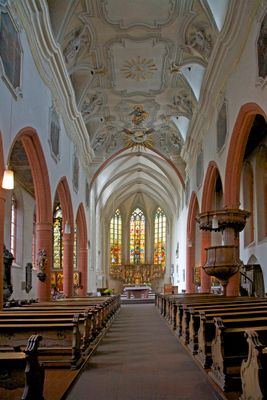
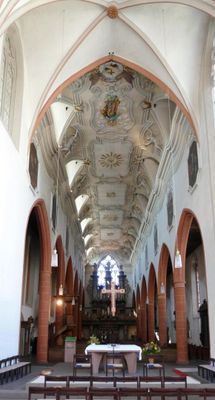
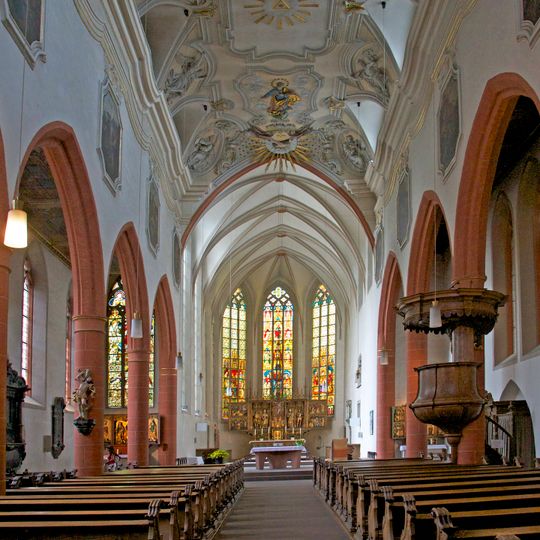
St. Sebastian is a church with pointed arches, tall windows, and stone walls typical of medieval Gothic religious buildings. The interior displays Baroque furnishings and decorative elements that were added later and complement the original Gothic space.
The Franciscans settled in Limburg in 1232 and used a wooden church from 1252; the present Gothic basilica was built in the early 14th century with funds from wealthy citizens. The friars joined the Observant reform and transferred their property to the Archbishop of Trier in 1485. The Reformation closed the monastery and church from 1577 to 1582. In 1742 the architect Martin Ulrich vaulted the nave and added Baroque stucco by Brother Angelus Homburg; the monastery was dissolved in 1813 and the church became the Stadtkirche in 1820.
The church is dedicated to Saint Sebastian, whose image appears in a ceiling medallion of the nave. Since 1827 it has belonged to the Diocese of Limburg and serves today as a filial church of the cathedral parish of St. George. The side aisles keep two gilded late-Gothic altarpieces, one showing the Pietà and the other the Crucifixion.
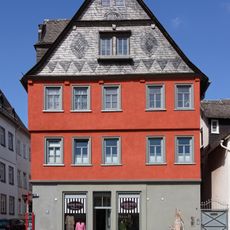
The church stands on Bischofsplatz and remains visible from the outside at any time, though interior access depends on service schedules. Visitors interested in seeing the Gothic details and Baroque furnishings should check opening times, as regular services take place here.
The organ case dates from 1686, carved by the Franciscan friar Adam Öhninger of Lohr am Main; when Johannes Klais built the new organ in 1970/71, the historic case kept its original paintwork. The intarsiated pulpit and the confessionals also survive from the Baroque period.
The community of curious travelers
AroundUs brings together thousands of curated places, local tips, and hidden gems, enriched daily by 94,068 contributors worldwide.