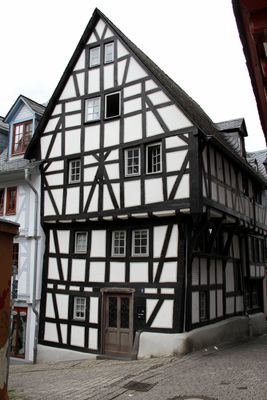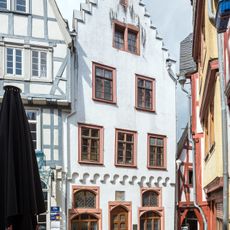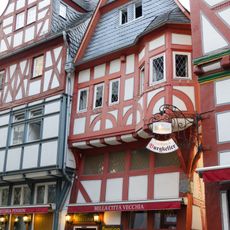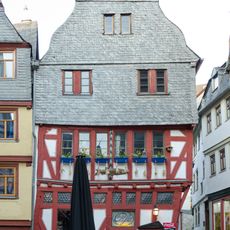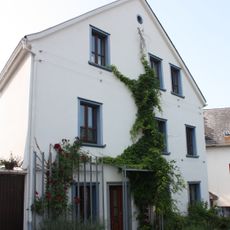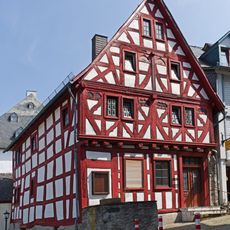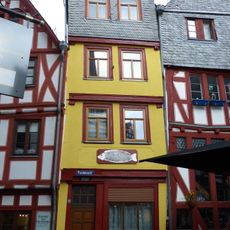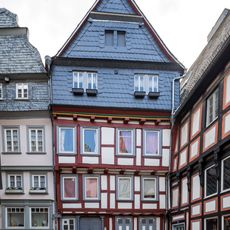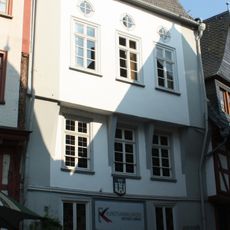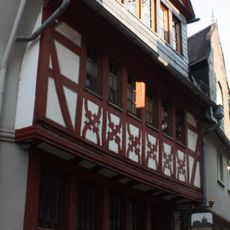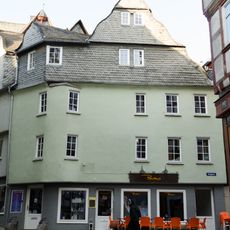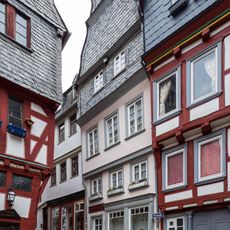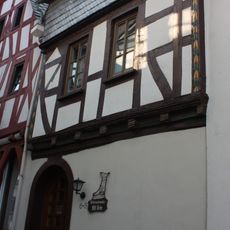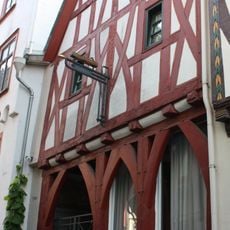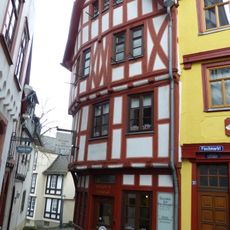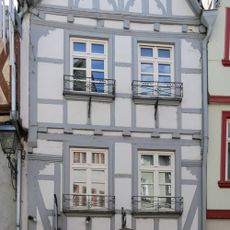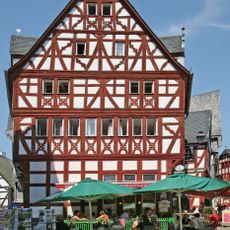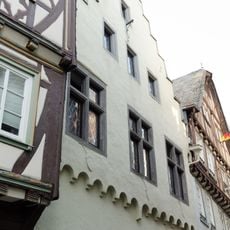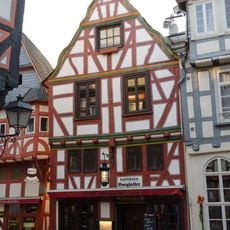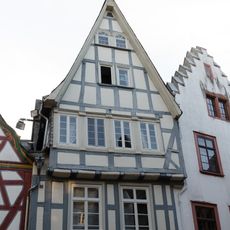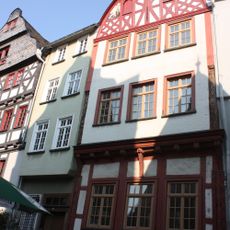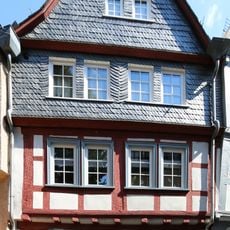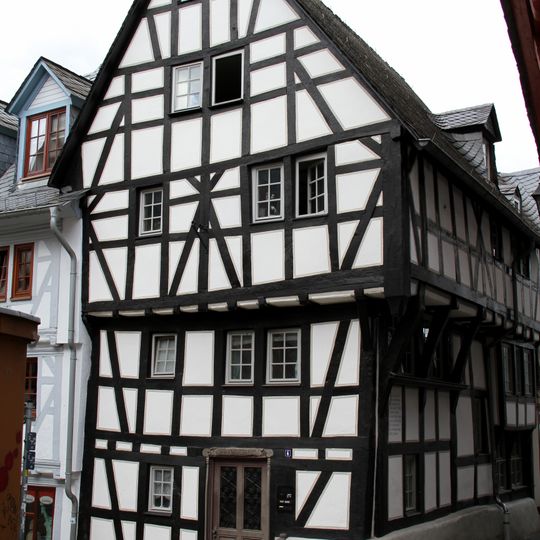
Kleine Rütsche 4, Timber-framed cultural heritage monument in Limburg an der Lahn, Germany.
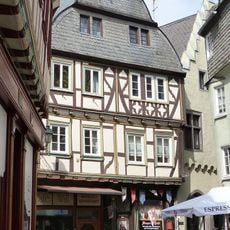
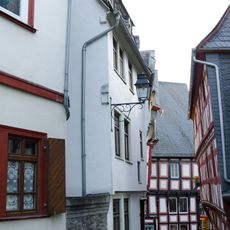
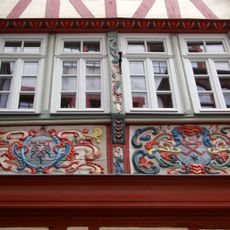
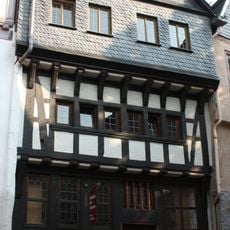
Kleine Rütsche 4 is a timber-framed house in Limburg an der Lahn known as one of the town's narrowest buildings with characteristic wooden beams and details from reconstruction after the great fire. The structure shapes the old town streetscape with its tight facade and belongs to the preserved buildings from this rebuilding period.
The house was built in 1290 at the corner of Kleine Rütsche and Fahrgasse, one year after the great town fire. In 1670 Tomas Graudniz (Thomas Trauditz) and his wife Katerina Hirsin (Katharina Hirsch) had it rebuilt, as recorded in an inscription of 1672 above the front door. After the roof truss and spiral staircase were renewed in 1960, the house was restored in 1983/84 and partly returned to its 13th-century state.
The nickname "Säcker" for old-town residents is tied to this spot: Kleine Rütsche 4 and the buildings opposite on the Fahrgasse formed the narrowest point of the Cologne–Frankfurt trade road, and Cologne's permitted wagon dimensions were enforced here. Overloaded carts had to be reloaded by Limburgers for a fee. The house is still lived in today.
The house sits at the center of the old town and is easily found by walking through the narrow streets of the downtown area. Around the location are restaurants, cafes, and shops that give visitors reasons to explore the neighborhood.
Kleine Rütsche 4 and the buildings across the Fahrgasse formed the narrowest point of the old trade road from Cologne to Frankfurt, part of the Via Publica. Cologne set the permitted wagon dimensions to prevent overloading; if a wagon was too wide, Limburgers reloaded it for a fee. One explanation holds that this is why old-town residents are still called "Säcker".
The community of curious travelers
AroundUs brings together thousands of curated places, local tips, and hidden gems, enriched daily by 92,850 contributors worldwide.