Hauptfriedhof Saarbrücken, Cemetery and architectural heritage monument in Saarbrücken, Germany.
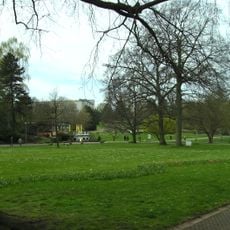
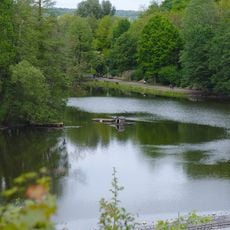
Hauptfriedhof Saarbrücken is a cemetery and architectural heritage site in the city, with large sections of organized grave fields, monuments, and green spaces. Wide pathways connect the different areas and make the layout easy to navigate.
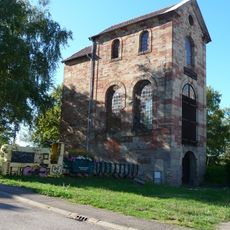
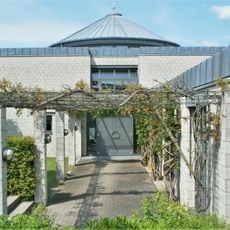
The cemetery was laid out in 1914 as a burial ground for soldiers fallen in the First World War. From 1916 it was opened to civilian burials, and in 1917 the inner-city cemeteries of St. Johann and Alt-Saarbrücken were closed. In 1926 the decision was taken to expand it into Saarbrücken's main cemetery; between 1928 and 1930 Walther Kruspe designed a consecration hall and crematorium costing around two million francs.
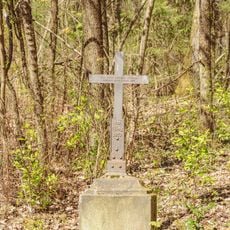
The cemetery displays different burial forms, from traditional graves to modern urn sections, reflecting how people in this region remember their loved ones. Walking through, you notice how memorial styles and grave designs have evolved across generations.
The cemetery lies in the southwest of Saarbrücken between Am Hauptfriedhof street, Metzer Straße and the French-German border. Its centre is a roundabout with a water basin, and wide paths connect the grave fields. The grounds are open daily; the two consecration halls and the crematorium are in the northern section.
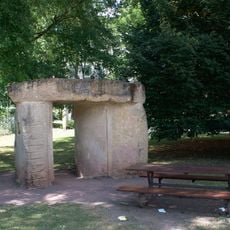
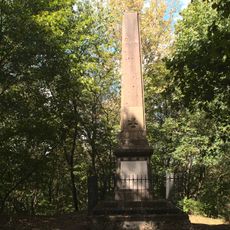
The cemetery holds grave fields for Muslims, for Yazidis, for stillborn children (Fötengrabfeld), and for the Bektashi dervish order, a rare arrangement in a German municipal cemetery. The grounds also contain monuments to the dead of the Franco-Prussian War of 1870/71 and both World Wars.
The community of curious travelers
AroundUs brings together thousands of curated places, local tips, and hidden gems, enriched daily by 94,645 contributors worldwide.