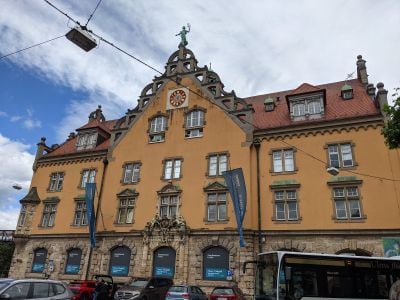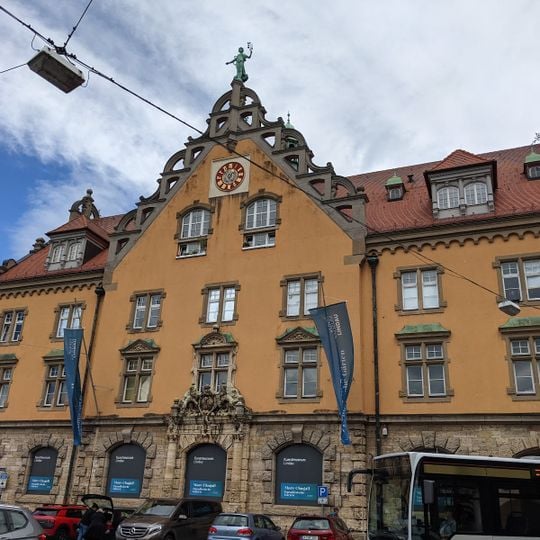
City Museum of Lindau, City museum in Lindau, Germany.
The City Museum of Lindau occupies the Haus zum Cavazzen, a Baroque townhouse built in 1729–30 by the Appenzell architect Jakob Grubenmann for the merchant family Seutter von Loetzen on the western side of the market square. Its collection of paintings, sculptures, Lindau domestic interiors, toys and mechanical instruments reopened on 17–18 May 2025 after renovation.
The house Zum Cavazzen was built in 1729–30 by the Appenzell architect Jakob Grubenmann for the merchant family Seutter von Loetzen, after a fire destroyed most houses around the market square in 1728. The museum itself opened there on 19 July 1930, after owner Ludwig Kick donated the building to the town in 1929; before that the municipal museum had occupied the upper floor of the Old Town Hall since 1890.
The museum's name comes from the house itself, Zum Cavazzen, a merchant's residence built in 1729-30. Its collection centres on Lindau's domestic culture, with furniture from Gothic times to Art Nouveau, historic toys and mechanical musical instruments. Two well-preserved 17th-century death panels from the old Aeschach cemetery, from the Bertsch and Krenckel families, are among the pieces visitors can study.
The museum occupies the Haus zum Cavazzen on the western side of the Marktplatz on Lindau island. It reopened on 17 May 2025 after renovation begun in 2018, so the collection is accessible again. The building is a short walk from Lindau's island railway station and harbour.
The Cavazzen House was originally a private mansion belonging to a wealthy trading family, reflecting the spaciousness and luxury that successful merchants of this region enjoyed. This transformation from private home to public museum shows how the use of such buildings has shifted over centuries.
The community of curious travelers
AroundUs brings together thousands of curated places, local tips, and hidden gems, enriched daily by 94,512 contributors worldwide.