Steinbrüche von Wernsbach, Sandstone quarry and geological site in Georgensgmünd, Germany
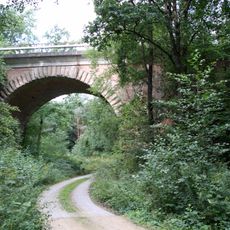
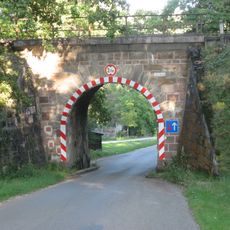
The Steinbrüche von Wernsbach is a sandstone quarry with steep mining walls reaching up to 26 feet (8 meters) high and weathered rock faces throughout. The site features artificial tunnels and stone arches created during centuries of extraction work.
Burgsandstein was quarried here by local farmers about 600 years ago, mainly in winter and as a side job. The quarry was not recorded in the 1808 Bavarian cadastre; larger prospecting began after 1865, and a tunnel entrance marked 1895 signals industrial extraction. In the following 30 years up to a million cubic metres were removed and shipped to Nuremberg. After a pause in the 1930s, quarrying resumed briefly after World War II for rebuilding.
The name Wernsbach refers to the village, not a stream; the quarries lie in the Hollerstuben field, 1,100 m southeast of Wernsbach and 1,400 m northeast of Mauk. Today the site serves as a recreation area popular with hikers, climbers and mountain bikers. A tunnel entrance bears the year 1895, marking the start of industrial extraction.
The quarries are open all year round and can be reached on foot or by bike via trail number 2 or the Seenländer circular trail from Wernsbach or Mauk. Parking is limited in both villages. Some spots carry a serious risk of falling.
The sandstone here dates back to the Triassic period about 215 million years ago, when this area sat at the southern edge of the Germanic Basin. The stone was valuable enough to be transported all the way to Nuremberg for use in major construction projects.
The community of curious travelers
AroundUs brings together thousands of curated places, local tips, and hidden gems, enriched daily by 92,728 contributors worldwide.