Hohen Neuendorf church, Protestant church in Hohen Neuendorf, Germany.
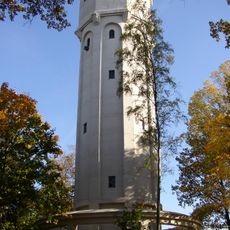
Hohen Neuendorf church is a plastered brick hall church built from 1907 to 1909 to a design by royal building officer Georg Büttner, combining Heimatstil with neo-baroque facade elements and a Romanesque-style apse. The nave, covered by a barrel vault on a coffered timber frame, seats about 500 people. A 40-metre square onion-dome tower with three bells and a clock stands on the south-east side, and the apse is attached to the south-west.
Residents sought their own church from 1847; in 1898 farmer Hornemann donated the plot on condition a church be built within ten years. The congregation raised about 50,000 marks, and royal building officer Georg Büttner designed the Heimatschutz-style church with neo-baroque plasterwork. The foundation stone was laid on 26 September 1907, the tower head set in June 1908, and the church consecrated on 21 February 1909. It served as a simultaneous church for local Catholics until they built their own in the 1930s.
The church was built as a Simultankirche: until the Catholic community erected its own building in the 1930s, Catholics in Hohen Neuendorf attended services here alongside Protestants. The apse's floral wall paintings, whitewashed over in 1935, were uncovered and restored in 2009 by the Jacob painting firm from Ketzür.
Visitors can enter the building on most days to view the interior or attend services held throughout the week. It helps to check ahead about opening times and available tours, as these may vary depending on the season and church schedule.
The tower carries three bells, and each of its four sides has a clock. Since 1998 a T-Mobile antenna has been mounted inside the tower, which serves the town as a height landmark and gives the network good coverage of the area.
The community of curious travelers
AroundUs brings together thousands of curated places, local tips, and hidden gems, enriched daily by 92,670 contributors worldwide.