Schweta Castle, Renaissance house in Döbeln, Germany
Schweta Castle was a moated castle rebuilt around 1600 as a Renaissance palace at the confluence of the Zschopau and Freiberger Mulde, in what is now the Döbeln district of Schweta. It was blown up in 1953; its sandstone fireplace and bell are kept in the Burg Mildenstein museum in Leisnig.
Schweta Castle is first documented in 1288, when Otto von Sueth held the estate as a fief from Landgrave Albrecht II of Thuringia. Around 1600 Adam von Wallwitz had the water castle rebuilt as a Renaissance palace. In 1945 the estate was plundered and its land distributed; the castle itself was later blown up.
The name Schweta probably derives from the Slavic swjet, meaning holy, and urn finds on the hill suggest a Slavic rampart and sacrificial site stood here before the castle. A local legend places a bishop's seat at Schweta in the 9th century, which is why the hill opposite is called Bischofsberg and the meadow Bischofswiese.
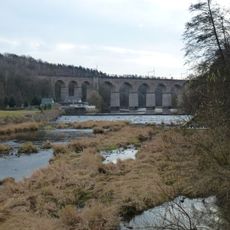
The site sits away from Döbeln proper and requires travel along secondary roads, so allow extra time for navigation. The remaining ruins are modest and overgrown, but the riverside location at the river confluence offers a pleasant walk.
The sandstone chimney piece and the castle bell survive in the Burg Mildenstein museum in Leisnig. The bell was cast in 1847 by Friedrich Gruhl of Kleinwelka for Heinrich Hensel, who had bought the estate two years earlier; around that time the 161-hectare property also ran a distillery and a press-yeast factory.
The community of curious travelers
AroundUs brings together thousands of curated places, local tips, and hidden gems, enriched daily by 93,182 contributors worldwide.