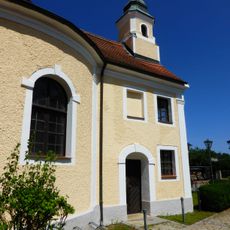
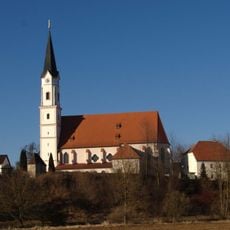
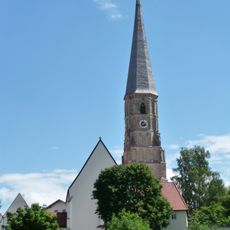
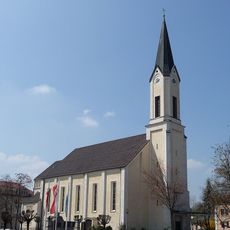
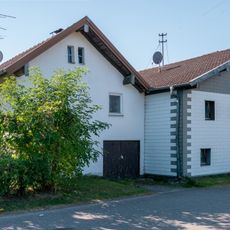
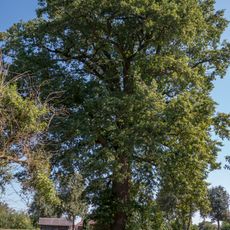
Burg Julbach, Archaeological castle ruins in Julbach, Germany.
Burg Julbach is a vanished hilltop castle on the Schlossberg, a long spur in the municipality of Julbach, Rottal-Inn district, Bavaria. Its core area measures about 75 by 46 metres, cut off to the north by a neck ditch, with a motte-like mound serving as the outer bailey. Remains include an 8-metre section of wall, 1 metre thick, and a 57-metre-deep masonry-lined well shaft.
A Raffolt de Jugilbahe appears in 1078 as a witness to the founding charter of Ranshofen Abbey, and Wernhard von Julbach held the title comes by 1165. Archaeological finds point to a first building phase in the mid-12th century and a large extension around 1500, possibly after the castle was destroyed in 1504 in the Landshut War of Succession. From 1377 the Wittelsbachs held Julbach as a pledge, bought outright in 1382.
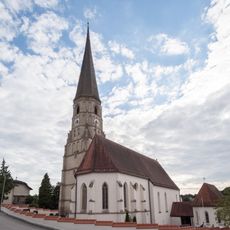
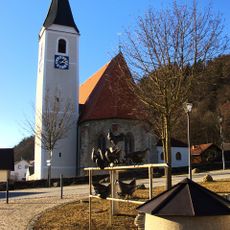
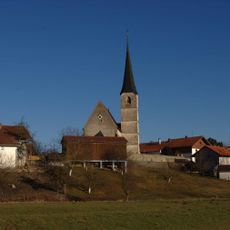
The name Julbach is recorded from 1078 as Jugilbahe, in a Ranshofen monastery charter witnessed by Raffolt de Jugilbahe. The castle hill above the church is called Schlossberg, and the village church stands on ground beneath which an Erdstall passage system runs. Since the 2000s the association Burgfreunde zu Julbach e. V. has worked on research and archaeological securing of the site.
The grounds can be explored on foot, with access to both hilltops and their structures. It is advisable to wear sturdy footwear since the terrain is uneven and can be muddy in places.
Under the castle hill and the church of Julbach runs an Erdstall, a 100-metre-long system of narrow underground passages. The castle well shaft itself is 57 metres deep and lined with masonry. Excavation finds such as a Friesach pfennig, crossbow bolts and a bronze arm ring are displayed in Julbach's town hall.
The community of curious travelers
AroundUs brings together thousands of curated places, local tips, and hidden gems, enriched daily by 92,694 contributors worldwide.