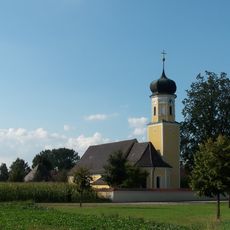
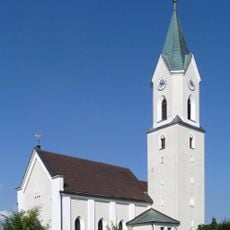
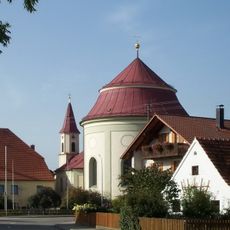
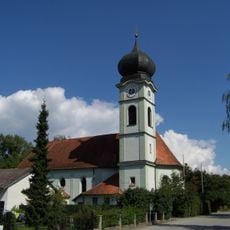
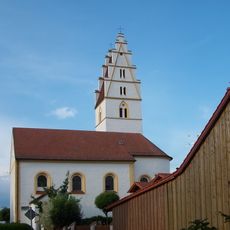
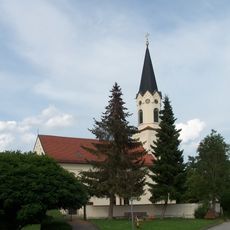
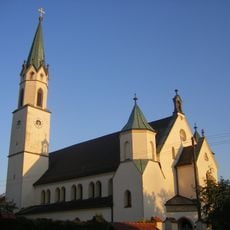
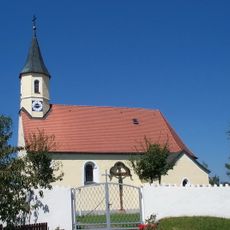
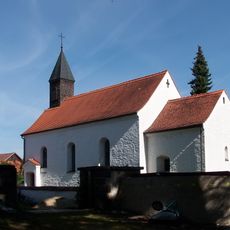
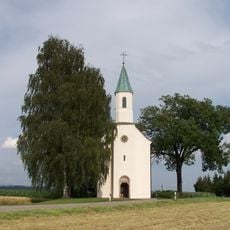
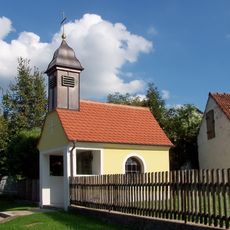
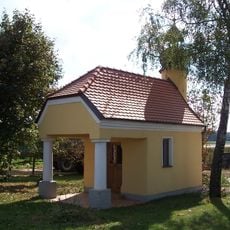
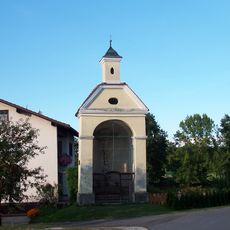
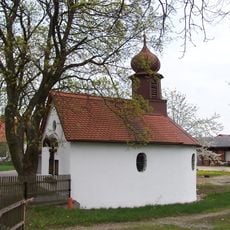
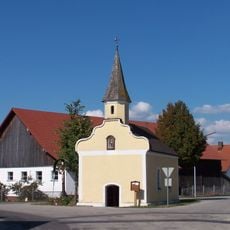
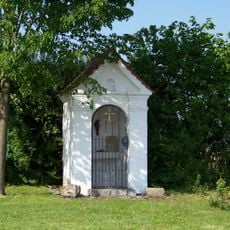
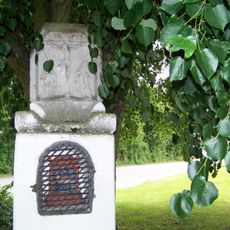
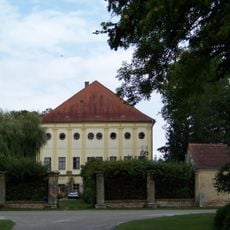
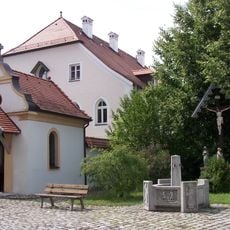
Schloss Puchhof, Royal palace in Aholfing, Germany.
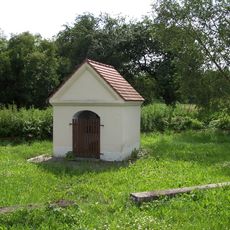
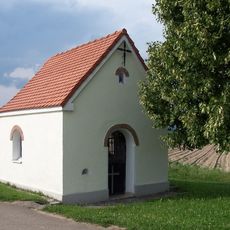
Schloss Puchhof, also called Altes Schloss Puchhof, stands at Puchhof 67 in the municipality of Aholfing, Straubing-Bogen district. The estate is listed as a Bavarian monument (D-2-78-112-9) and as a buried archaeological site (D-2-7040-0099) with medieval and early modern remains, including the castle chapel and traces of earlier buildings. A stone building was erected in 1798; Carl Lang later added the Neues Schloss and a landscape park.
The estate's origins trace back to Prüfening Monastery in the 12th century before passing through noble families. By 1242, the Wittelsbachs, one of Bavaria's most influential dynasties, had taken control of the property.
The name Puchhof does not come from a family but from the estate itself, held by Prüfening Monastery from 1140. As a Hofmark, the abbot held the right to brew and serve beer; around 1710 this led to a legal dispute with Count Josef von Leiblfing of Schloss Rain that lasted almost a hundred years. The abbot's right to serve beer remained untouched, but Rain subjects could be punished for drinking it there.
Access to the palace is limited since it functions as a private working farm and residence. Visitors should understand that the building stands under heritage protection and only exterior viewing is practically available.
The estate was bought in 1937 by Fritz Thyssen, the Ruhr industrialist; his daughter Anita Gräfin Zichy-Thyssen moved in that October and had the west wing remodelled to her taste. His wife Amélie returned after 1949 and rebuilt the farm, receiving the Grand Cross with Star and Sash from Konrad Adenauer at the castle in August 1960.
The community of curious travelers
AroundUs brings together thousands of curated places, local tips, and hidden gems, enriched daily by 94,554 contributors worldwide.