Schloss Wildenreuth, Medieval castle ruins in Erbendorf, Germany
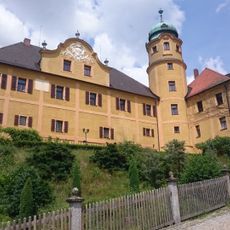
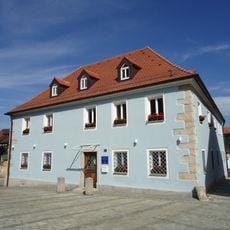
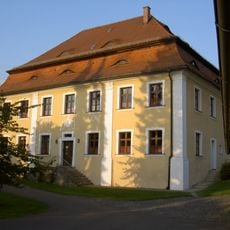
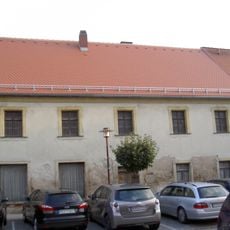
Schloss Wildenreuth is a three-storey rendered masonry building with a hipped roof and segmental-arch windows, rebuilt in Neo-Renaissance forms after a fire in 1854. Its square tower with a half-hipped roof incorporates parts of the Romanesque bergfried. A 1911 conversion under Friedrich Karl von Podewils added bay windows on both long sides, a round-arched portal and a northern extension with round corner towers and pointed spires.
The earliest written record dates to 1294 when a nobleman named Marquard Wild witnessed a document for the Landgraves of Leuchtenberg. The castle likely developed from territories controlled by the Counts of Sulzbach who held power in the region.
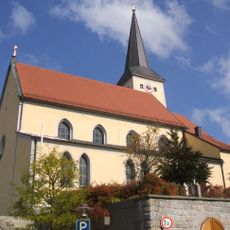
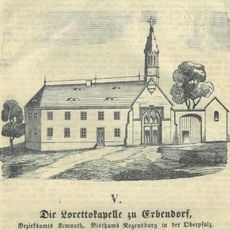
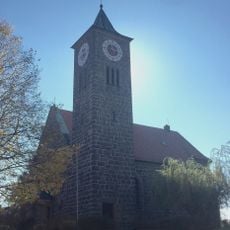
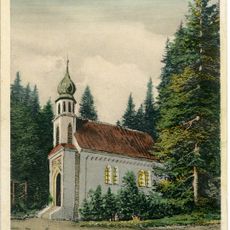
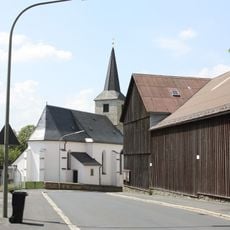
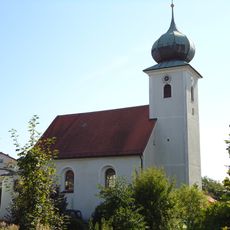
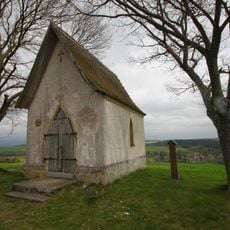
The chapel at Wildenreuth is the parish church of St. Jakob, a Simultankirche since 1663: Catholics and Protestants share it equally and still hold services there. The church was rebuilt in 1809 and again after a fire in 1851. The local landowner held the patronage, tying the church to the estate.
Schloss Wildenreuth stands on a low hill spur at the eastern edge of the village of Wildenreuth, in the Erbendorf area; the parish church of St. Jakob borders the former outer bailey. The castle is now run as a hotel, and the building itself is only opened to the public during events such as the Christmas market and the "Wildenreuther Wintermärchen".
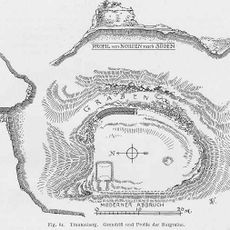
Beneath the visible early modern remains, archaeologists have found traces of an earlier medieval fortress buried in the ground. These layers reveal that the site has been fortified across different time periods.
The community of curious travelers
AroundUs brings together thousands of curated places, local tips, and hidden gems, enriched daily by 94,634 contributors worldwide.