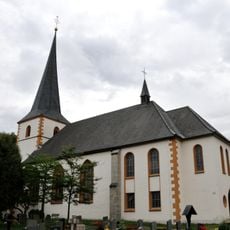
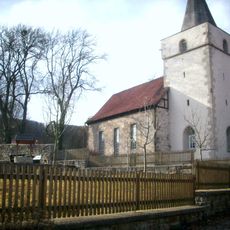
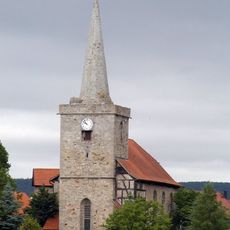
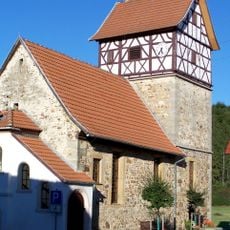
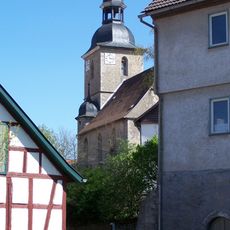
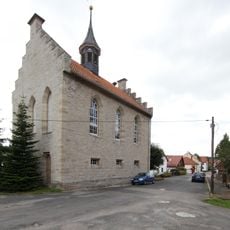
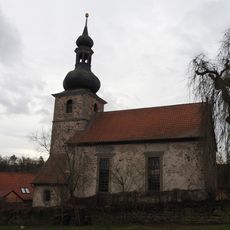
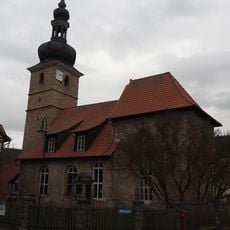
Castle Bibra, Medieval castle in Grabfeld, Germany.
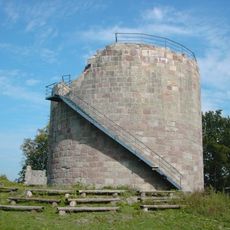
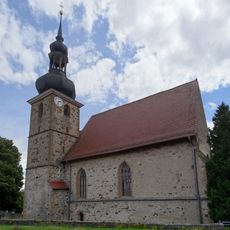
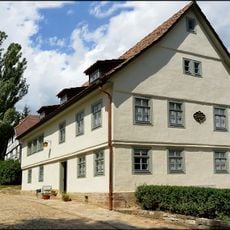
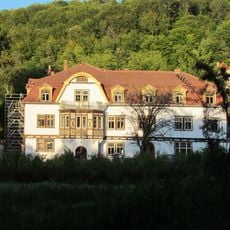
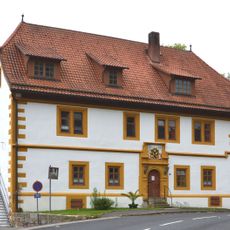
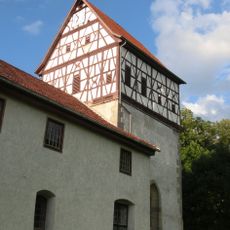
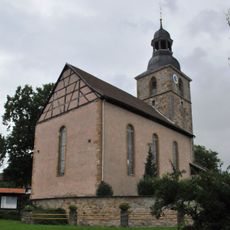
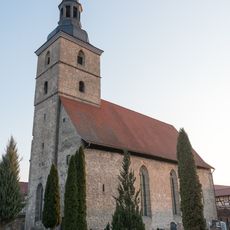
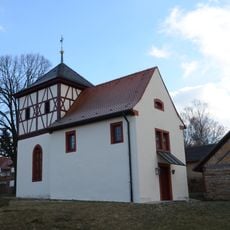
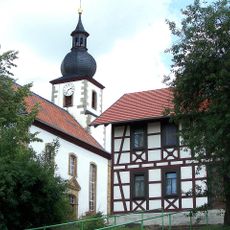
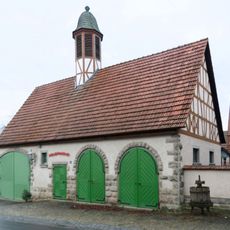
Burg Bibra is a small moated castle in the Bibra section of Grabfeld, in the Schmalkalden-Meiningen district. It lies in the northeastern part of the village, on an artificial island; remains of the castle moat survive. Parts of the outer wall and corner towers remain from the former fortification, and one of the surviving supplemented houses now holds a small seminar centre with 17 beds.
The castle was first mentioned in 1119, when a document names Rubertus de Bybera; the Bibra family built a small moated castle on an artificial island in the 12th century. It was destroyed in the Peasants' War of 1525 and again in the Thirty Years' War, then rebuilt each time. In 1486 it held the status of a royal palatinate. After World War II the property was nationalized in the GDR and later returned to the Barons von Bibra.
The castle and the village both take their name from the Franconian lords of Bibra, first recorded in 1119 as "Rubertus de Bybera". The family kept the estate for centuries, and after German reunification it was returned to the barons von Bibra, who had lost it under GDR rule. Since 1994 one of the surviving buildings has housed a small seminar centre with 17 beds.
The castle remains stand in the north-eastern part of Bibra village, in the Grabfeld municipality, on the site of a water castle on an artificial island; remnants of the moat survive. One of the surviving buildings houses a seminar centre with 17 beds, so the grounds are in active use. The site is a heritage monument of Thuringia.
The Bibra family held the castle for centuries, but after World War II the estate was nationalised by the GDR authorities. Following German reunification it was returned to the barons von Bibra, and in 2002 the owners received substantial funds from the state of Thuringia for restoration.
The community of curious travelers
AroundUs brings together thousands of curated places, local tips, and hidden gems, enriched daily by 93,682 contributors worldwide.