Hauptfriedhof Limburg an der Lahn, Cultural heritage cemetery in Limburg an der Lahn, Germany.
Hauptfriedhof Limburg an der Lahn is a cemetery laid out in 1882 on a rectangular plot at Unterheide am Schafsberg, outside the city. Five parallel avenues planted with different deciduous trees and cypresses, crossed by transverse paths, structure the grounds; the central axis leads to an oval mound topped by a crucifix with a bronze corpus.
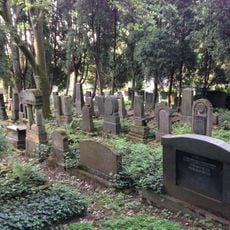
The burial ground developed alongside the history of Limburg and holds graves from different time periods up to the present day. It documents the city's past through the people buried there and their monuments.
The burial grounds show how people in this region honor and remember their deceased through the design of monuments and gravestones. The memorials reflect local traditions and the way the community expresses remembrance.
The rectangular grounds lie on the Unterheide am Schafsberg outside the town, entered through the surviving gates of the main portal; the wrought-iron perimeter fence was removed in the Second World War. Five parallel avenues planted with different deciduous trees and cypresses, crossed by transverse paths, lead to the oval Kreuzhügel and on to the war memorial sections.
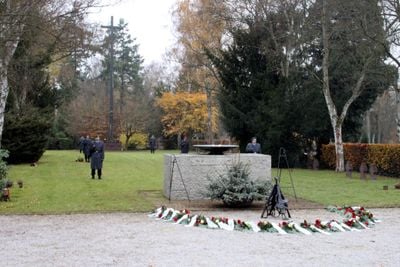
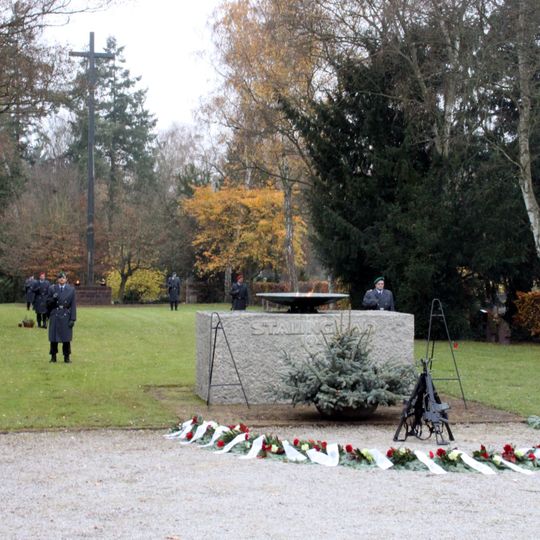
The Stalingrad memorial was inaugurated on 18 October 1964 as the central German monument to soldiers who died in the Battle of Stalingrad or in subsequent captivity. In 1988 the city of Limburg took over the Stalingradkämpfer-Stiftung to maintain the site after the veterans' association dissolved in 2004.
The community of curious travelers
AroundUs brings together thousands of curated places, local tips, and hidden gems, enriched daily by 93,852 contributors worldwide.