Lützelburg, Medieval castle ruins in Kempten, Germany.
Lützelburg is a castle ruin on a hilltop directly south of the Burghalde fortress in the center of Kempten, Bavaria. The site sits within a community garden area that has been in use since 1920.
The origin and ownership of the Lützelburg are not documented. Johann Baptist Haggenmüller in 1840 mentioned a wooden bridge to the Burghalde in the 11th century, but no evidence supports this. A 1569 woodcut by Hanß Abelin and Hanß Rogel still shows a castle on the hill; Matthäus Merian depicted it as a ruin in 1673. During World War II a shelter bunker was built into the hill.
The name Lützelburg comes from Middle High German lützel, meaning "small", so it is simply the "Small Castle". A memorial stone initiated by Otto Merkt in 1939 stands at the site; its inscription, "Hoehere Gewalt der Stuerme brach die stolzen Burgenthuer", is not backed by any source. Since 1920 the slope east of the hill has been used as the Lützelburg allotment gardens.
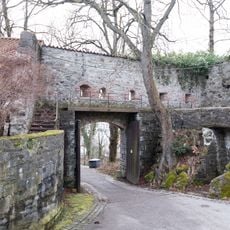
The ruin stands on a grassy hill reached by a curving dirt path lined with wooden fence posts; bare trees partly screen the low stone walls and small tower. A narrow red chute runs down the slope beside the ruin. The hill lies just south of the Burghalde, and a small garden area established in 1920 lies east below the hill.
A memorial stone placed in 1939 by Otto Merkt marks the site with inscriptions about the castle's construction and destruction. Historical records document a wooden bridge that connected this castle to the nearby Burghalde fortress during the 11th century.
The community of curious travelers
AroundUs brings together thousands of curated places, local tips, and hidden gems, enriched daily by 94,453 contributors worldwide.