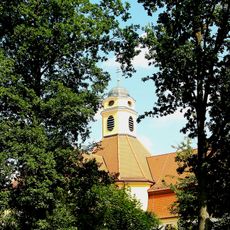
Felsenkeller in Schwandorf, Rock cellar and geotope in Schwandorf, Germany.
The Felsenkeller in Schwandorf is a labyrinth of more than 130 cellars cut into Dogger sandstone, mainly in the Weinberg and Holzberg hills and in the Fronberg district. The chambers lie partly side by side and partly stacked, since they were dug in different periods and for different purposes rather than to one plan. About 60 rooms are open to visitors on guided tours.
The tunnels are thought to have been begun around 1380, possibly linked to prospecting shafts for Upper Palatinate iron ore; remains of a mine cart rail document stone extraction inside the hill. In the 16th century the cellars served cold fermentation brewing, evidenced by a Schwandorf beer recipe of 1549. From the mid-19th century private owners stored food, and in the Second World War the tunnels were converted into air-raid shelters and hospital rooms; on the night of 17 April 1945, 6,000 people sheltered here.
The cellars' name comes from the rock into which they were cut, and their use changed with the town's brewing trade. A Schwandorf beer recipe of 1549 documents that local brewers already used cold fermentation, which required cellars at 10 °C or less. In Advent the theater society stages fairy tales, each scene in a different cellar room.
To explore the site, follow marked pathways through the underground passages and read the information panels along the way about geological features. Plan enough time since navigating the underground network takes concentration and can initially feel disorienting.
The cellars cut into Dogger sandstone of the Aalenian stage expose numerous rock faces and natural fissures; some fissures were widened by cellar thieves to reach lower levels. The Bavarian Environment Agency classified the cellars as a geotope of high value.
The community of curious travelers
AroundUs brings together thousands of curated places, local tips, and hidden gems, enriched daily by 93,130 contributors worldwide.