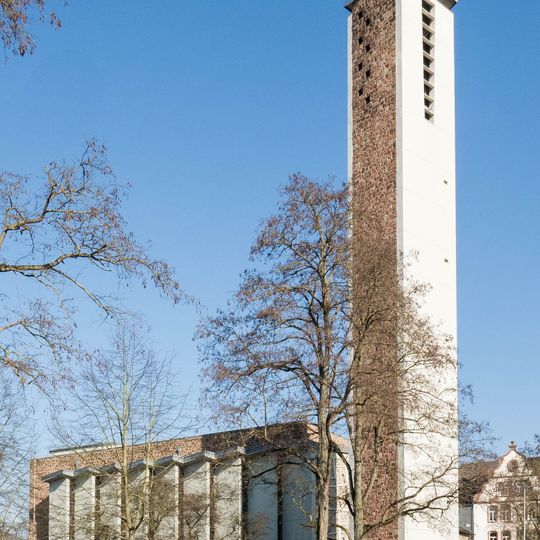
St. Peter and Paul Marburg, Catholic church in Biegenviertel, Marburg, Germany.
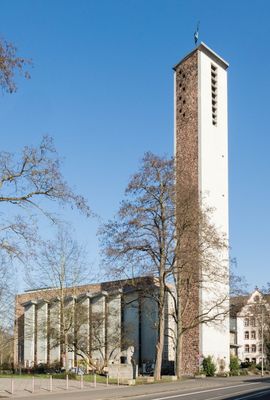
St. Peter and Paul is a Catholic church in Marburg's Biegenviertel, built 1957–1959 by Otto Linder and Erwin Lenz. Its cuboid hall, about 42 metres long and 15 metres high, has a side aisle on four round columns. A 42-metre campanile stands apart, clad on two sides in red sandstone and topped by a copper cockerel.
The parish bought land on Biegenstraße in 1904 under pastor Konrad Weber, but a million gold marks saved for the building were lost in World War I and the inflation that followed. After 1945 the number of Marburg Catholics rose to 20,000, reviving the plan. In August 1957 Bishop Adolf Bolte and cathedral canon Eduard Schick rejected a neo-Gothic or Baroque design and insisted on a modern church; the first sod was turned on 8 September 1957, the 750th birth year of St. Elisabeth. The foundation needed 99 piles, the cornerstone was laid on 22 June 1958, and Bishop Bolte consecrated the church on 6–7 June 1959, sealing relics of Saints Boniface and Sturmius into the altar.
The interior brings together religious artworks with modern design, including a bronze Christ figure by Hermann Tomada and a glass-concrete wall by Rudolf Haegele. These artistic elements create an experience that speaks to both worshippers and visitors in different ways.
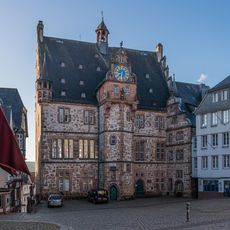
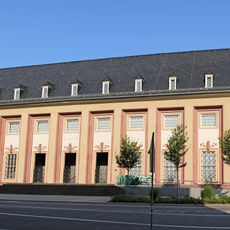
The church sits in central Marburg between the university lecture hall and city hall, making it easy to reach on foot. Visitors should note that access may be limited at times, especially when religious services are taking place.
The church has no windows visible on entry; light enters through fan-shaped windows on the south side and a band under the ceiling. The glass was designed by Marburg artist Erhardt Klonk, while Rudolf Haegele created the glass-concrete east wall behind the organ.
The community of curious travelers
AroundUs brings together thousands of curated places, local tips, and hidden gems, enriched daily by 93,106 contributors worldwide.