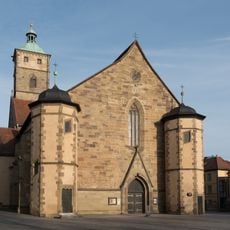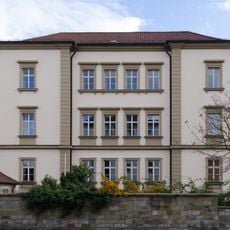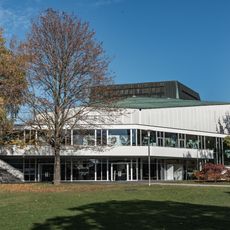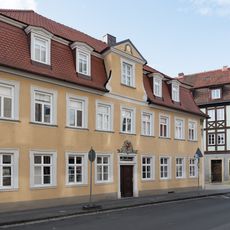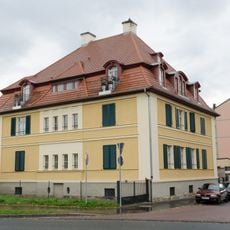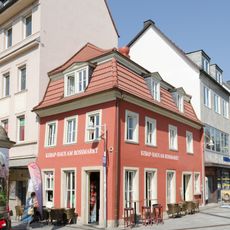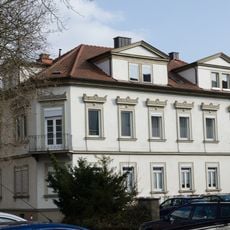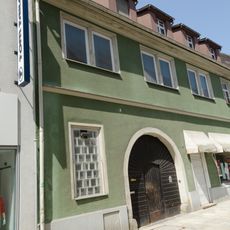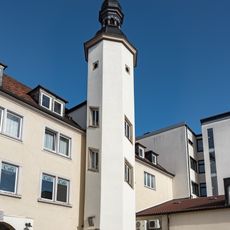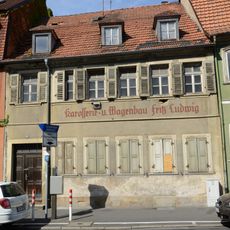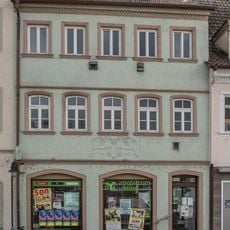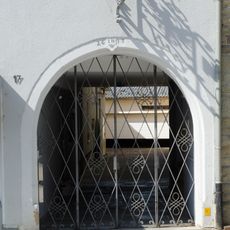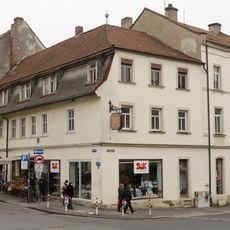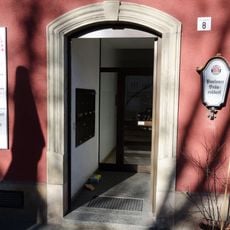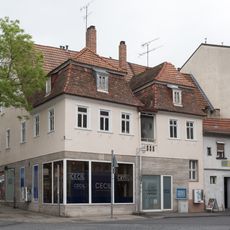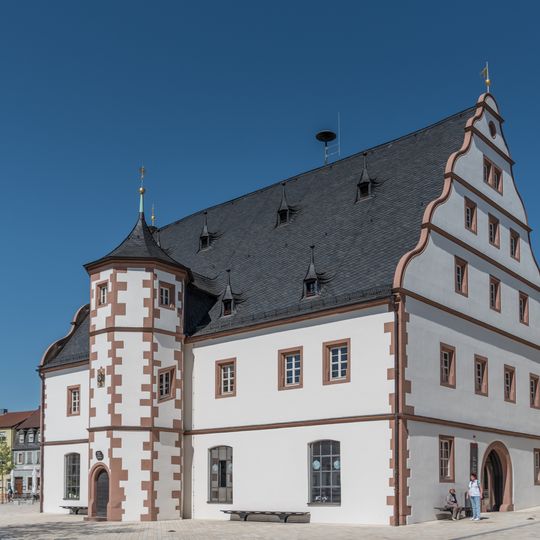
Zeughaus, cultural heritage monument D-6-62-000-18 (0) in Schweinfurt, Bavaria
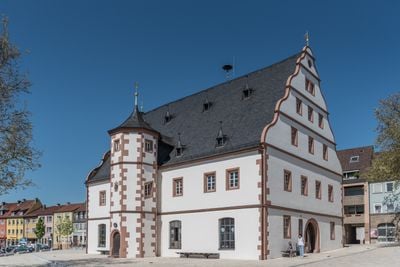
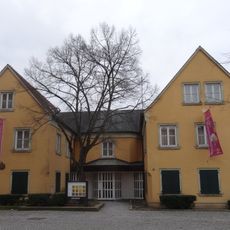
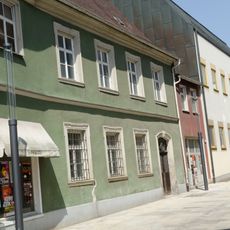
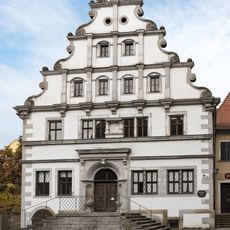
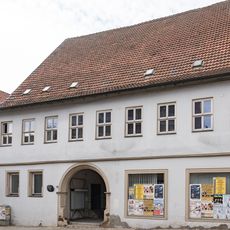
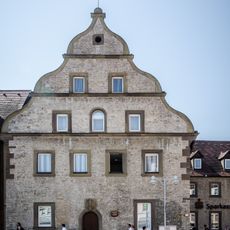
The Zeughaus is a Renaissance arsenal built in 1589–91 on Zeughausplatz in Schweinfurt's western old town. It has round-arched portals, cornices, curved gables, a stair tower and a three-storey saddle roof, giving five storeys in all. Cannonballs from the 1647 Swedish bombardment are lodged in its west facade.
The Zeughaus was built from 1589 to 1591 on the site of a horse mill destroyed in 1554, serving as the imperial city's weapons arsenal. In 1647, during the siege by Swedish troops under Carl Gustav Wrangel, cannonballs struck the building; several remain embedded in its west facade. In 1826, industrialist Wilhelm Sattler acquired the building and added extensions where he stored the toxic pigment Schweinfurt green. The city bought it in 2010 and renovated it in 2013/14.
The name Zeughaus refers to the building's original role as the imperial city's arsenal, where military equipment was stored and repaired as needed. Since the 2013/14 renovation it has served as a Haus der Familien, a meeting place for children, young people and their families. The square around it, Am Zeughaus, was also redesigned and most parking spaces removed.
The building sits centrally on Zeughausplatz and is easy to reach on foot from other historic sites in Schweinfurt. Visitors should take time to explore the square and surrounding area, as the grounds now feature improved walking paths and open spaces.
The cannonballs embedded in the west facade date from the 1647 siege, when Swedish troops under Carl Gustav Wrangel bombarded Schweinfurt and damaged roofs and the Obertor. Look for the balls protruding from the stone; they were left in place rather than removed.
The community of curious travelers
AroundUs brings together thousands of curated places, local tips, and hidden gems, enriched daily by 92,671 contributors worldwide.