Martinskirche Christenberg, Romanesque church building in Wetter, Germany
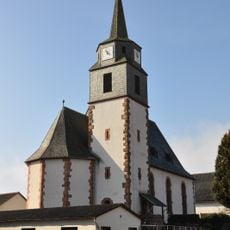
Martinskirche is a church on the Christenberg plateau, built of local red sandstone with a Romanesque nave and west tower from the 11th century. The nave measures 16.5 by 9.7 metres and has small round-arched windows; the west tower carries four corner turrets. A late Gothic five-eighth choir with a pointed roof turret replaced the apse around 1520.
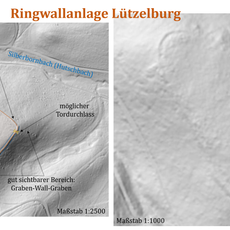
A fortified Celtic settlement stood on the Christenberg in the early La Tène period (480–280 BC), and a Frankish ring wall enclosing 4 hectares followed around 700–850 AD. A predecessor church, excavated in 1953, was replaced in the 11th century by the Romanesque nave and west tower. A pleban is documented in 1227 and the patronage of St Martin in 1231; the church became Protestant in 1527.
The name "Kesterburg" is recorded for the medieval church, which served as a Sendkirche and until 1522 as seat of a deanery of the Archbishopric of Mainz for the upper Lahn and Eder valleys. Since the Reformation in 1527 the church has been Protestant; today it belongs to the parish of Münchhausen and Wollmar and is used for weddings, funerals and special services.
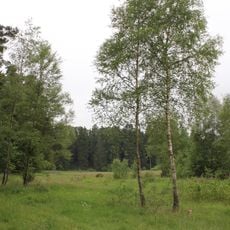
The church stands in the northwest corner of the churchyard, which lies within the former Carolingian fortification on the 387-metre plateau. The plateau is owned by the Protestant parish of Münchhausen, about 3 km west of the site. The nave's two small round-arched windows per side measure only 0.75 by 0.14 metres, so the interior stays dim; a sundial is set beneath the eastern south window.
The late Gothic outdoor pulpit on the south side is the church's art-historical rarity: a stone structure reached by an external staircase, from which preachers addressed the congregation gathered in the cemetery. It dates from around 1520, when the apse was replaced by the five-eighth close and the west tower was raised.
The community of curious travelers
AroundUs brings together thousands of curated places, local tips, and hidden gems, enriched daily by 94,029 contributors worldwide.