Sigiburg, Archaeological ruins and castle heritage site in Hörde district, Germany.
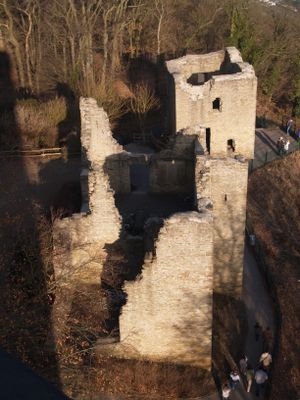
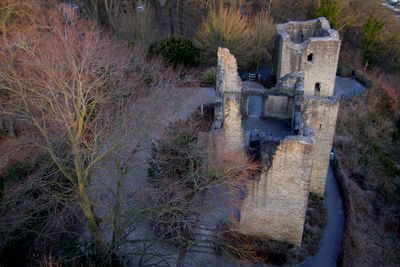
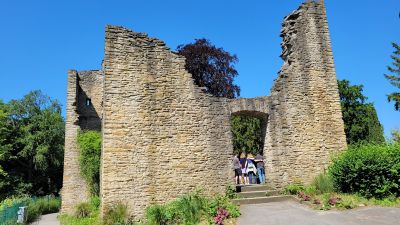
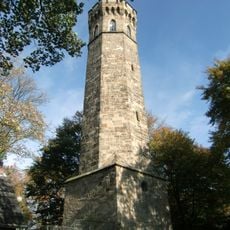
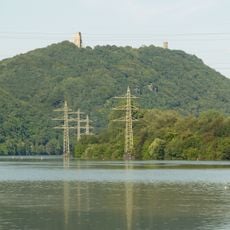
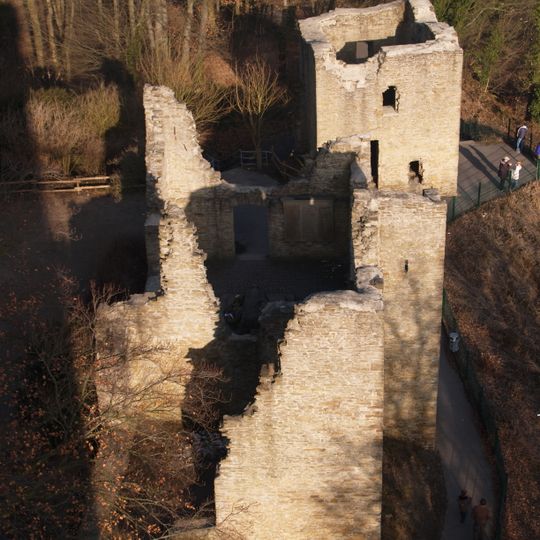
Sigiburg is the ruin of a hilltop castle on the Syberg, about 245 metres above the confluence of the Ruhr and Lenne. Rough light-brown and grey masonry survives as a tall jagged wall fragment on the left and lower wall sections enclosing a small paved area, with two rectangular openings in the far wall and a small square window high on the right. The main building was once surrounded by castle walls and two towers.
A Saxon hillfort stood here by around 700. Frankish forces under Charlemagne took it in 772, the Saxons retook it in 774, possibly led by Widukind, and Charlemagne seized and refortified it in 775. The stone Syburg was built around 1150 for the archbishops of Cologne; Count Eberhard von der Mark partly destroyed it in 1287, and by 1300 it passed to the counts of the Mark. It was probably abandoned in the 16th or early 17th century.
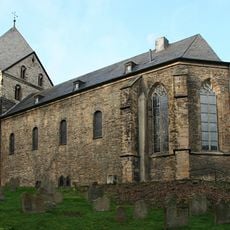
The name Sigiburg comes from the Saxon hillfort taken by Charlemagne in 772 and retaken by the Saxons in 774. Pope Leo III is said to have consecrated a church and the Petersbrunnen on the hill during his visit in 799, and the spring later served as a pilgrimage site. The earliest written record of the Petersbrunnen dates from 1472.
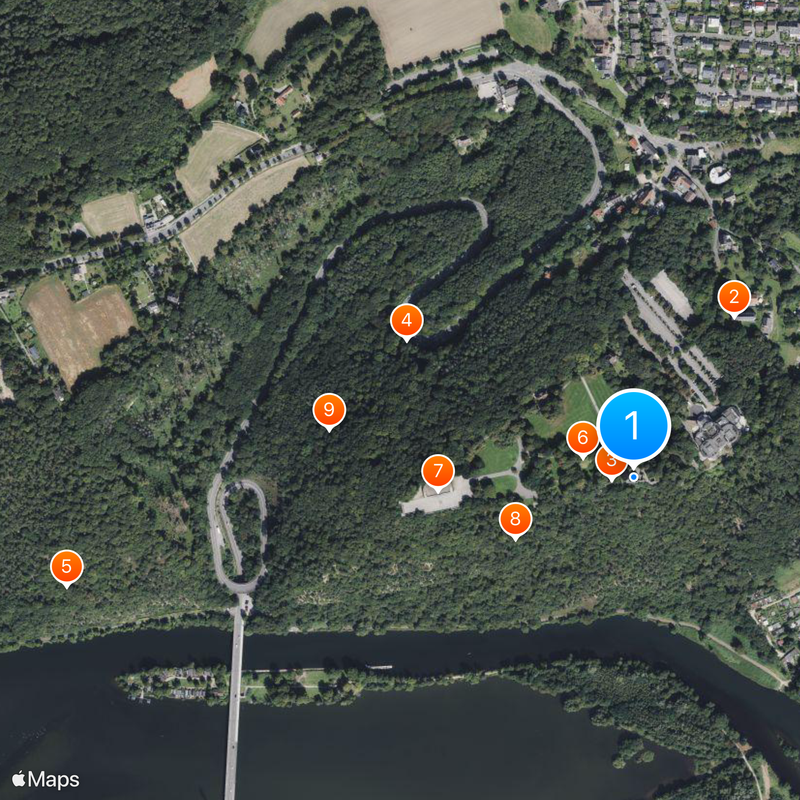
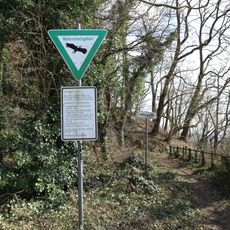
The site is located within Dortmund's city limits and remains accessible at any time, though the steep terrain makes it difficult for those with limited mobility. Sturdy footwear is recommended because the climb is demanding and can be slippery.
The Saxon hillfort was taken by Charlemagne in 772, retaken by the Saxons possibly under Widukind in 774, and taken again and refortified by Charlemagne in 775. The stone Hohensyburg above it is dated to 1150 and was a hilltop castle of the Cologne archbishops.
The community of curious travelers
AroundUs brings together thousands of curated places, local tips, and hidden gems, enriched daily by 92,637 contributors worldwide.