Karl-May-Höhle, Mining cave in Hohenstein-Ernstthal, Germany.
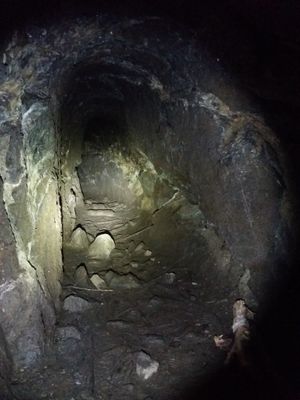
Karl-May-Höhle is a tunnel driven in 1620 into the serpentinite of the Steinberg, north of Hohenstein-Ernstthal. The passage is about man-high and a metre wide, curving left for some 20 metres before splitting into a 9-metre left branch and a 13-metre right branch. The floor is damp, with standing water on the first ten metres, though larger stones allow a dry entry.
Mining began in 1620 when a resident started excavating the tunnel for iron ore extraction. Economic difficulties caused the operation to be abandoned, leaving the mine unused for centuries afterward.
The name honors author Karl May, whose literary works drew attention to this region and its stories. Today visitors come to experience the connection between the author's imagination and the actual landscape he wrote about.
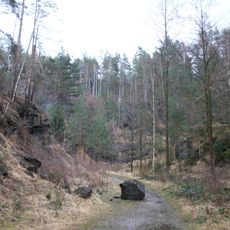
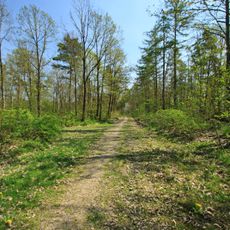
The cave lies in the Waldenburger Oberwald north of Hohenstein-Ernstthal and is freely accessible again after being sealed off by the mining authority during the GDR era. The entrance passage is about man-high and a good metre wide, bending left before splitting after roughly 20 metres into a 9-metre left branch and a 13-metre right branch. Water stands on the floor, especially along the first ten metres, so step on the larger stones to keep your feet dry.
The cave's nickname Räuberhöhle comes from the band of Christian Friedrich Harnisch of Hohenstein, active in 1771/72, whose loot was found in the tunnels after capture. Historians doubt this narrow, damp cave itself served as the gang's hideout.
The community of curious travelers
AroundUs brings together thousands of curated places, local tips, and hidden gems, enriched daily by 93,942 contributors worldwide.