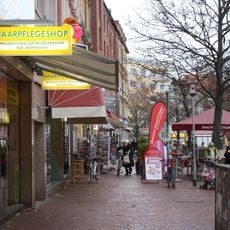
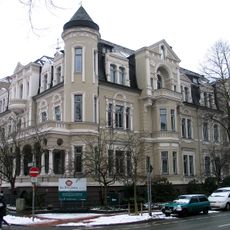
Wedekindplatz, Cultural heritage square in Mitte and Vahrenwald-List, Germany.
Wedekindplatz is a public square in Hannover that connects the districts of Mitte and Vahrenwald-List with buildings and structures from different architectural periods. The space includes seating areas, pedestrian pathways, and open ground that make it accessible and easy to navigate.
The square was laid out from 1892 as the quiet centre of a new quarter built between Lister Meile and Bödekerstraße, after List was incorporated into Hannover in 1890–91. The Wedekindstraße followed from 1894, and the square received its official name in 1907. Extending the street to Celler Straße in 1900 brought through traffic into the area.
The name does not refer to the playwright Frank Wedekind: the city archivist Helmut Zimmermann considered the gardener Johann Heinrich Wedekind the more likely namesake, since the street crossed land he leased at Am Holzgraben 2. Residents call the square "Klein-Paris". In 2017 the citizens' group "Wedewipfel" hung a banner by light artist Franz Betz on the old robinias to protest their felling.
The square is easy to reach by public transportation and has benches and wide pathways for comfortable walking. It is best visited during daylight hours when you can see the surroundings clearly and explore the neighborhood.
The square physically spans across two administrative districts, creating a rare point where Hannover's neighborhoods physically overlap. This makes it a location where you literally stand between two different parts of the city.
The community of curious travelers
AroundUs brings together thousands of curated places, local tips, and hidden gems, enriched daily by 92,686 contributors worldwide.