Landesirrenanstalt-Hauptanstalt, Mental health institution from 1908 in Teupitz, Germany.
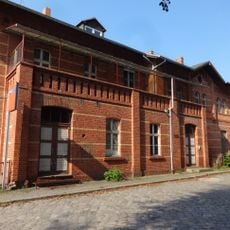
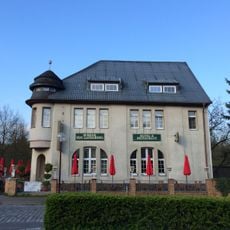
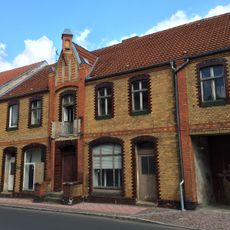
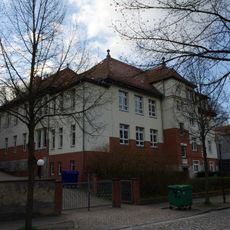
The Landesirrenanstalt-Hauptanstalt is a medical complex built in 1908 in Teupitz that contains administrative buildings, staff residences, workshops, and a kitchen with a banquet hall. The facility includes eight separate hospitals for male and female patients arranged across the grounds.
Teupitz won the provincial tender on 3 June 1904, favoured by its hillside site, the stations at Halbe and Groß Köris and the cheap land. From 1904 Theodor Goecke's pavilion buildings rose, and the main institution opened in 1908 under Carl Berthold Knörr at a cost of about 6.75 million marks, with its own power generation. In the First World War it served as a military hospital; during the Nazi era it was a transit institution for the Brandenburg and Bernburg killing centres.
The grounds show the architectural approach of early 20th-century institutional design, with buildings arranged in a pavilion style and connected by historical pathways. This layout reflects how hospitals of that era organized spaces to house patients in separate sections.
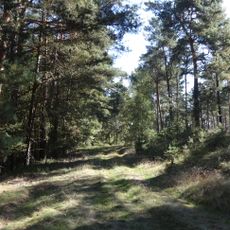
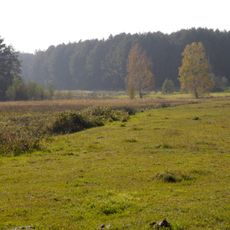
The complex lies southwest of Teupitz centre, south of Buchholzer Straße (Landstraße 74 toward the A13), on the Gesenberg hill. The listed grounds include the historic path system and remnants of the original landscaping, so expect uneven, partly overgrown surfaces. Parts of the site are used by Asklepios clinics, so some buildings are not open to visitors.
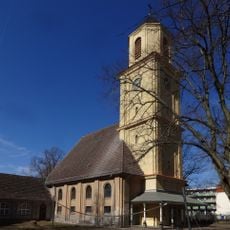
On 31 January 1769 the last public execution in Teupitz took place on this hill, then called Jesenberg. In the Middle Ages vines for the rulers at Teupitz Castle grew here. The brick water tower with its clock face survives from the 1904–1908 building phase.
The community of curious travelers
AroundUs brings together thousands of curated places, local tips, and hidden gems, enriched daily by 94,080 contributors worldwide.