Rathaus Fürstenfeldbruck, Former town hall in Fürstenfeldbruck, Germany
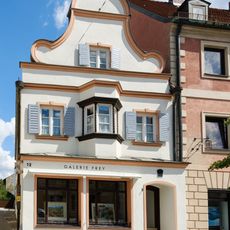
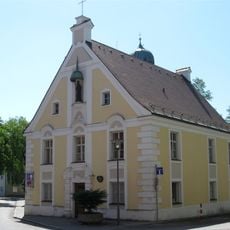
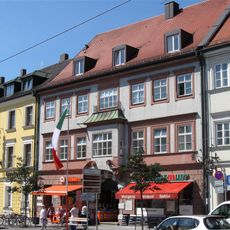
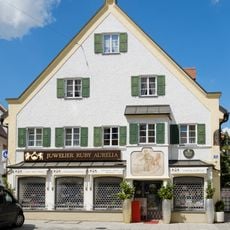
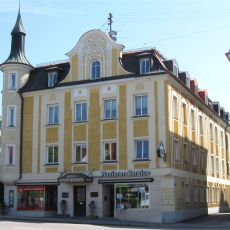
The Altes Rathaus in Fürstenfeldbruck is a 1781 building that served as the town hall until 1934. Its facade, redesigned around 1908 in Bavarian Baroque style, features bronze reliefs donated in 1869 by Munich bronze caster Ferdinand von Miller the Younger, depicting portraits of Duke Ludwig the Strict and Emperor Ludwig. The building also has a clock from the Royal Bavarian Court Tower Clock Factory Johann Mannhardt.
The merchant Anton Pruggmaier built the house in 1781; in February 1864 the market administration bought it from the Rehm family, with approval from the government of Upper Bavaria, and converted it into a community house. From 1868 the ground floor held a grain hall, a police room and a meeting room, while the upper floors gained an assembly hall for 250 people. From 1935 the employment office, the NS welfare organization and the local NSDAP group used the building; after 1945 the housing office, the city building office and the Bavarian Red Cross moved in.
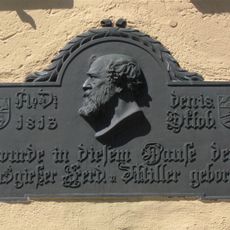
The building's 1869 gable reliefs were donated by Munich bronze founder Ferdinand von Miller the Younger and show portraits of Duke Ludwig the Strict and Emperor Ludwig. Its clock came from Johann Mannhardt's Royal Bavarian court clock factory. Since 1984 the reconstructed 1908 assembly hall has served as the registry office's wedding room, hosting around 400 weddings in 2018.
The building is located in the old town and is easily reached on foot as it sits in a central spot. Visitors can view it from outside and explore its facade details while wandering the surrounding streets.
The bronze reliefs on the gable, showing portraits of Duke Ludwig the Strict and Emperor Ludwig, were donated in 1869 by the Munich bronze founder Ferdinand von Miller the Younger. The clock came from Johann Mannhardt's Royal Bavarian Court Tower Clock Factory.
The community of curious travelers
AroundUs brings together thousands of curated places, local tips, and hidden gems, enriched daily by 94,644 contributors worldwide.