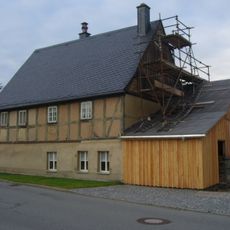
Dorothea-Stolln, Mining heritage site in Annaberg-Buchholz, Germany.
The Dorothea-Stolln is a mine in Annaberg-Buchholz with underground tunnels, solid stone walls, and water systems that date back to the silver mining era. The site shows the practical solutions that miners developed over centuries to work deep underground.
Mining in Cunersdorf began in the 16th century, and by 1536 the pit yielded 2409 Guldengroschen per Kux within two and a quarter years, thanks to a silver lode grading up to 40 percent. Yields fell in later years. A shaft cut more than 125 m deep revealed the year 1551. The adit entrance still in use was built in 1853; after 1946/47 the SAG Wismut searched for uranium here until 1958.
The site reflects the deep connection between this region and mining, which shaped people's lives for generations. Visitors can see today how mining defined the identity and structure of this area.
The guided tour includes a 250-metre boat ride through the adit, so visitors should dress warmly: the temperature underground stays at 8 °C year-round. The mine is run by the IG Altbergbau Dorotheastollen Cunersdorf e.V. association.
The guided tour includes a 250-metre boat ride through the adit, the only way visitors travel part of the 53 km of passages. The mine holds a constant 8 °C, and the entrance still in use was built in 1853.
The community of curious travelers
AroundUs brings together thousands of curated places, local tips, and hidden gems, enriched daily by 93,473 contributors worldwide.