Schloss Neuendettelsau, Medieval castle in Neuendettelsau, Germany.
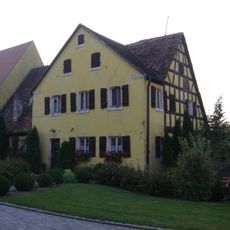
Schloss Neuendettelsau is a two-storey, horseshoe-shaped moated castle with a saddle roof, occupying part of a medieval castle site. Its east wing retains medieval masonry and the remains of an older castle chapel with late 15th-century frescoes. The south wing dates from around 1700, while the west wing with corner tower was added from 1925. A stone bridge inscribed 1758 crosses the largely preserved dry moat.
In 1298, a document first names Hermann von Vestenberg as owner of 'castro Tetelsaue'. In 1325 the estate was sold to the Pfinzing family of Nuremberg, while the Vestenberg and later Seckendorff families held it as castle men. A 1461 fire led to rebuilding by 1479 under the Seckendorffs. In 1518 Sebastian von Eyb bought the estate from the Ansbach margraves and introduced the Reformation; it remains with the von Livonius Freiherren von Eyb.
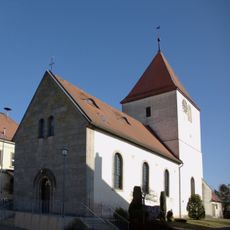
The castle chapel sits in the ground floor of the north wing, where a simple stucco-framed ceiling survives; the late 15th-century frescoes belong to the older castle chapel in the east wing. Until 1945 the lords of the castle held the right to appoint the village church's pastor, a privilege of the von Eyb family.
The castle remains under private ownership and visitors should respect posted access restrictions. You can view the structure from the exterior to appreciate its medieval design and water features from different vantage points.
The large hall holds a cast-iron stove with a clay top, bearing the Eyb and Brandenburg coats of arms and dated 1723. The bridge before the south wing is dated 1758 by an inscription on its east side. The garden gate from the 18th century has three parts with sandstone posts and ball finials.
The community of curious travelers
AroundUs brings together thousands of curated places, local tips, and hidden gems, enriched daily by 94,575 contributors worldwide.