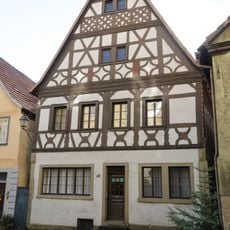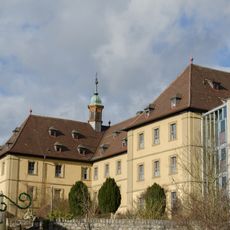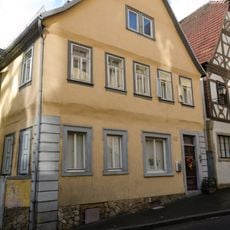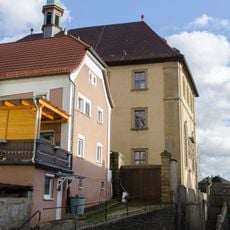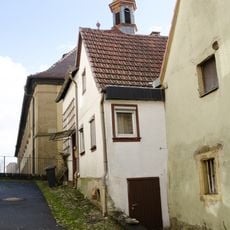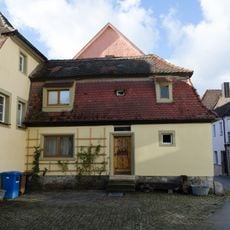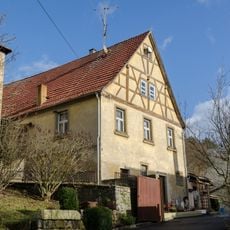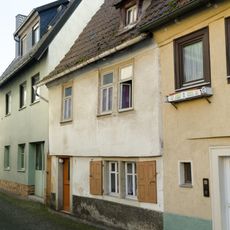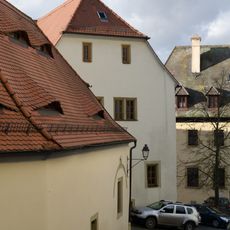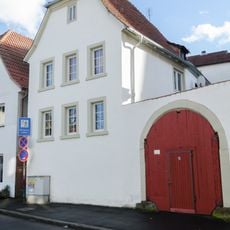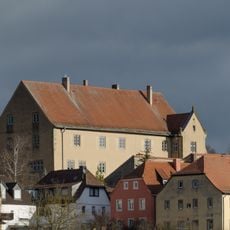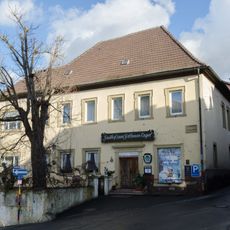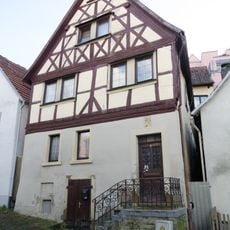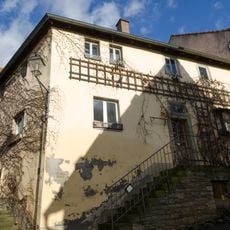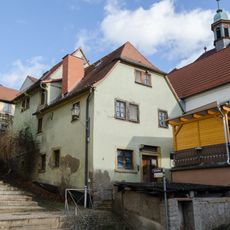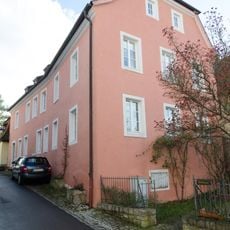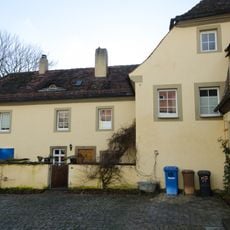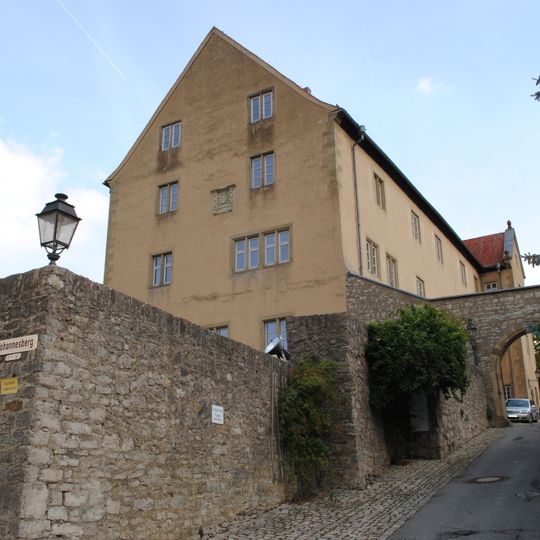
Burg Arnstein, Medieval castle in Arnstein, Germany.
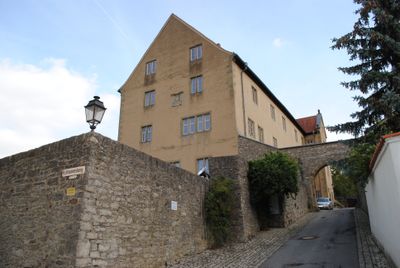
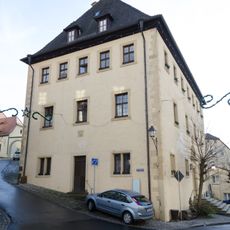
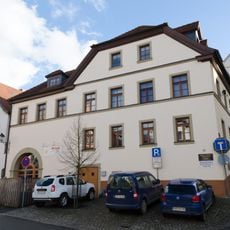
Burg Arnstein is a high-medieval castle on a spur above the confluence of the Wern and Schwabach, its walls built directly over the former rock outcrop. After the Peasants' War, Bishop Konrad III von Bibra replaced the ruined four-wing complex with a 33-metre-long, 16-metre-wide manor house dated 1542/1543. Julius Echter later added a gate with drawbridge and his coat of arms, tying the castle into the town walls.
Burg Arnstein was first documented in 1225, when the Bishopric of Würzburg asserted ownership of the Castrum Arnstein. Its origins are not scientifically established; the fortification may go back to walls built against the Magyar invasions after 907. On 24 April 1381 the castle and office were pledged to the von Hutten family for debts of 12,056 gold guilders. Bishop Rudolf II von Scherenberg redeemed it and rebuilt it as a four-winged castle; in 1525 rebels captured it, and Konrad III von Bibra gave it its present layout, completed in 1542/1543.
The castle has shaped the town's identity for centuries and shows how residents connect their heritage to this structure. It reflects the power that local nobility once held in this region.
The monument sits on a hill at Am Kirchgarten 11 in the center of Arnstein and is easily accessible on foot. The best time to visit is in good weather, when you can enjoy views from above and paths are dry.
From the height you can overlook the entire valley, just as the castle lords planned it long ago. This position was not chosen by chance but was strategically crucial for securing the trade routes of that era.
The community of curious travelers
AroundUs brings together thousands of curated places, local tips, and hidden gems, enriched daily by 93,693 contributors worldwide.