Hagener Au und Passader See, Special Area of Conservation in Plön District, Germany
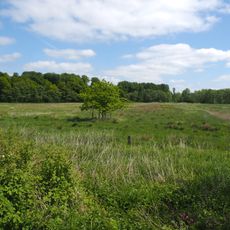
Hagener Au and Passader See form a 525-hectare Natura 2000 site in Plön District, stretching 10.6 km north to south from Passader See near Probsteierhagen to the Hagener Au's mouth on the Baltic Sea north of Laboe. The lake's entire water surface is mapped as nutrient-rich still-water habitat with pondweed or frogbit, while bank woods between the lake and Probsteierhagen carry woodruff beech. The highest point, 31 m above sea level, lies on the western slope at the stream's outflow.
The area received formal protection status under European Union law in 2004 as part of the Natura 2000 network. This designation established legal frameworks to safeguard the ecological functions of the habitats and their dependent species.
The protected area lies in the Probstei, a historic farming region of the East Holstein hills, and its name comes from the villages of Passade on the lake and Hagen, whose stream the Au carries to the Baltic. The lake and stream are managed under the EU Habitats Directive, with the Passader See and upper Hagener Au inside the Dobersdorfer See landscape protection area and the lower course inside the Hagener Au protection area.
Access to the area is easiest from the surrounding villages that border the protected zone. Visitors should know this is not a managed recreation site but a conservation area with restrictions to protect habitats.
The protected area's highest point, 31 metres above sea level, lies on the western slope where the Hagener Au leaves the Passader See; the lowest is the stream's mouth on the Baltic north of Laboe. The site stretches 10.6 kilometres north to south, and its northern edge is separated from the Bottsand-Marzkamp coastal protected area only by a sand beach.
The community of curious travelers
AroundUs brings together thousands of curated places, local tips, and hidden gems, enriched daily by 94,130 contributors worldwide.