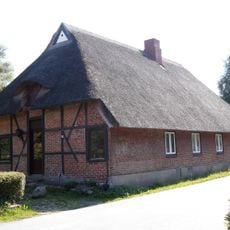
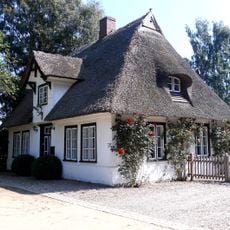
Gut Lammershagen, Manor house in Lammershagen, Germany.
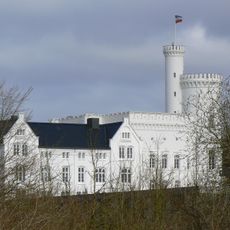
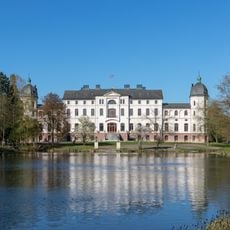
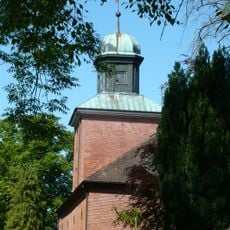
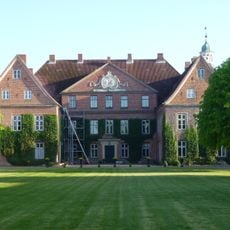
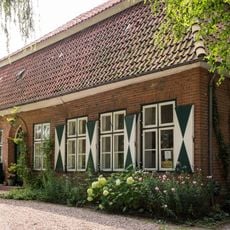
Gut Lammershagen is a manor estate in the municipality of Lammershagen, Kreis Plön. Its preserved courtyard ensemble dates from the mid-18th century and consists mainly of the gatehouse, the manor house and the former horse house, all listed monuments. The single-storey brick manor house has a high hipped roof, a central gable with frontispiece and a curved external staircase leading to a sandstone-framed entrance.
Lammershagen is first documented in 1416 with Schack von Rantzau, and the estate later passed through the von Buchwaldt and von Ahlefeld families. Under von Buchwaldt the gatehouse was built in 1743, and around 1748 Heinrich Christoph Graf von Baudissin had the early 17th-century manor house remodelled to its present form. In 1828 the property went to the von Blome family, in 1866 to the Sloman family, and in 1901 to Carl Joachim Ernst Hirschberg, whose descendants still farm it.
The manor stands as a focal point of village life, reflecting how land ownership and community roles were once tied to this residence. Its design and surrounding layout show how agricultural work and social life revolved around such estates.
Gut Lammershagen is a privately owned working estate; the manor house, gatehouse and stables are not open to visitors, so the ensemble is seen from the public road. The buildings stand close together in the village of Lammershagen, and the brick gatehouse with its small tower is the easiest landmark to orient by.
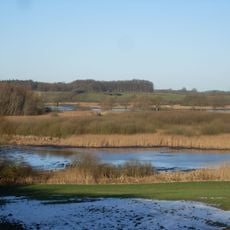
The manor remains surrounded by fields and hedgerows in its original agricultural setting, allowing visitors to understand how it functioned as a working estate. This rural context helps reveal the practical relationship between the residence and the farmland it once commanded.
The community of curious travelers
AroundUs brings together thousands of curated places, local tips, and hidden gems, enriched daily by 93,537 contributors worldwide.