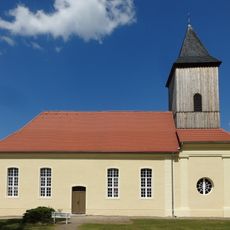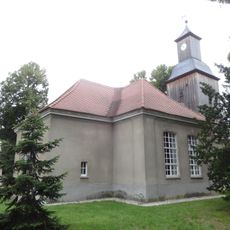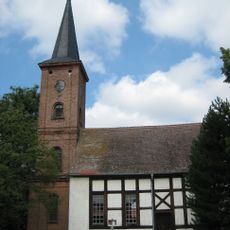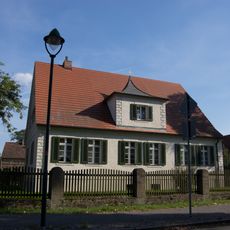
Gutshaus Märkisch Wilmersdorf, Cultural heritage monument in Märkisch Wilmersdorf, Germany.
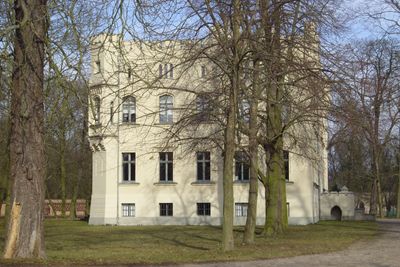
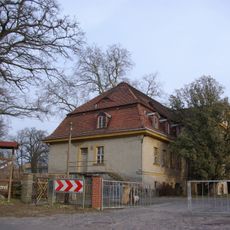
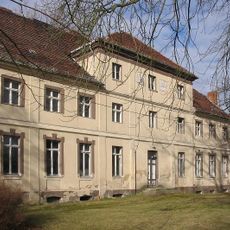
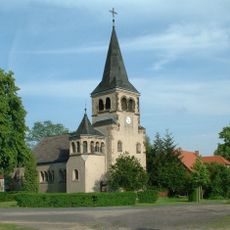
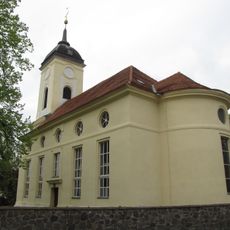
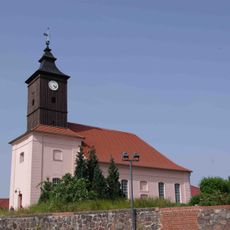
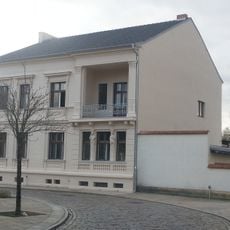
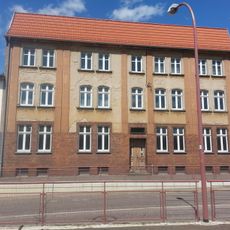
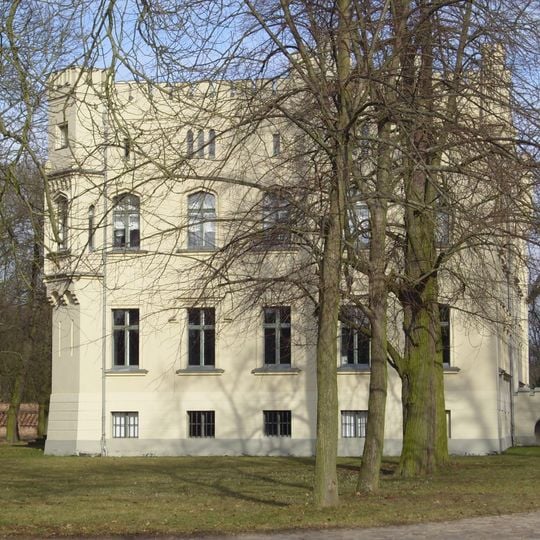
Gutshaus Märkisch Wilmersdorf is a classical manor house with nine bays and a plastered facade topped by a shallow hipped roof with decorative crown molding. It sits north of the village center within a walled estate grounds and aligns visually with the village church standing to the south.
The manor house emerged in the late 1600s when chamberlain Henning Bernd von Schwerin acquired the village in 1684 and later received it as a fief from Friedrich I. The estate passed through different ownership periods and took its present form during the 1800s.
The manor house long served as the economic hub of the village and still shapes how people see the place today. After the war, it became shelter for displaced families and later housed a children's home and school.
The building is visible from outside and lies close to the village center, making it easy to find. The estate with its walled grounds can be viewed well from public pathways nearby.
During the tenant farming period in the 1800s, Fritz von Schwerin operated a Gordon Setter breeding facility here, specializing in hunting dogs. This unusual breeding operation brought attention to the estate beyond the local area.
The community of curious travelers
AroundUs brings together thousands of curated places, local tips, and hidden gems, enriched daily by 92,003 contributors worldwide.