Schloss Trebnitz, Educational château in Müncheberg, Germany.
Schloss Trebnitz is a two-storey classical manor house rebuilt between 1900 and 1910 in neo-baroque forms, incorporating its predecessor. Its central risalit carries a double-column front with a gable, and the family coat of arms shows a lily, wolf irons and a count's crown. The house stands at the end of a formal approach across the courthouse, with the park and former estate buildings around it.
Trebnitz village and estate were first documented in 1124 as a foundation of the Silesian monastery of Trzebnica, then in the Lebus land held by the Silesian Piasts. Hussites destroyed the village in April 1432; the monastery remained feudal lord until 1498. After the Thirty Years' War left it desolate, Joachim Ernst von Görzke bought the district in 1661, beginning the manor's history. The Brünneck family owned it from 1825 to 1945 and rebuilt the house in neo-baroque forms between 1900 and 1910.
The château serves today as a meeting place where people from different countries gather to connect with each other. The buildings and grounds have become spaces for learning and international cooperation.
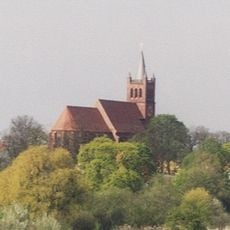
Schloss Trebnitz lies in the Trebnitz district of Müncheberg, east of Berlin, and is reached via a representative driveway through the courthouse. The estate is a listed ensemble of manor, courthouse, park and former service buildings, so visitors should check opening times before travelling, as the buildings are used for educational programmes.
On the castle grounds is the Gustav Seitz Museum, which displays works by the well-known sculptor. Art lovers can see here a permanent collection that documents this artist's work.
The community of curious travelers
AroundUs brings together thousands of curated places, local tips, and hidden gems, enriched daily by 94,362 contributors worldwide.