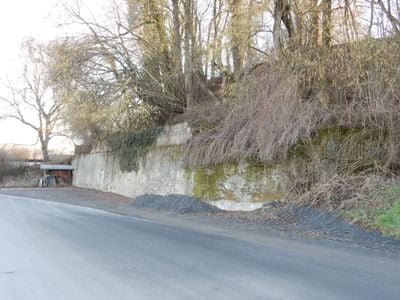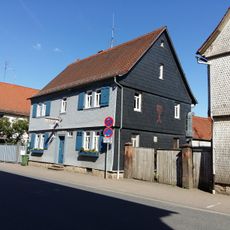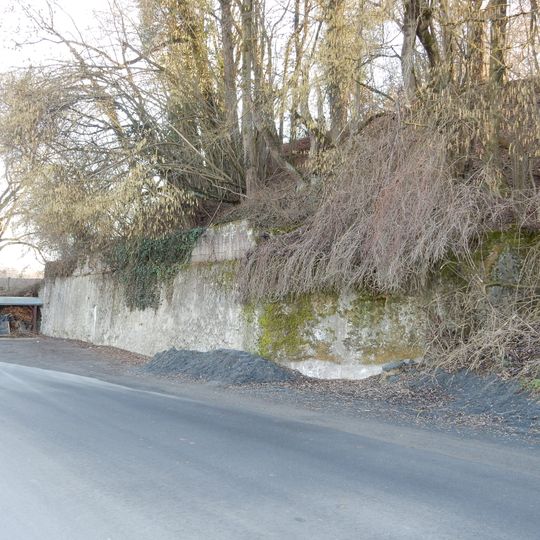
Eiskeller, Historical ice cellar in Groß-Bieberau, Germany.
The Eiskeller in Groß-Bieberau is an underground storage structure from the 19th century, built with thick walls and insulating materials. The building was designed to keep ice cool for long periods and prevent it from melting.
The building was constructed in 1870 as a practical response to the need for food preservation before modern refrigeration existed. It belonged to a time when ice storage was essential infrastructure for many households and businesses.
The cellar's name comes from its use by brewer Georg Schönberger's brewery, which needed ice to cool beer. In winter, blocks were cut from the nearby Eisteich pond, wrapped in straw and carried into the tunnels. Later the cellar served for mushroom cultivation.
The Eiskeller lies on Wersauer Weg in Groß-Bieberau, opposite the Ruthsenmühle. Inside, the temperature stays around 6 °C in winter and up to 8 °C in summer, so bring a jacket. The two parallel tunnels and five chambers are reached through entrances and a second access with a 64-step spiral staircase.
The cellar's second entrance reuses a 64-step spiral staircase from the Katzenelnbogen castle, which collapsed in 1845; Gothic stonemason marks are still visible on its central spindle. Building stones from the same ruined castle were also reused in the cellar walls.
The community of curious travelers
AroundUs brings together thousands of curated places, local tips, and hidden gems, enriched daily by 92,756 contributors worldwide.