Höhlengebiet im Kleinen Deister, Nature reserve with limestone caves in Springe, Germany
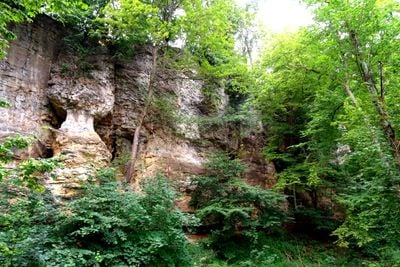
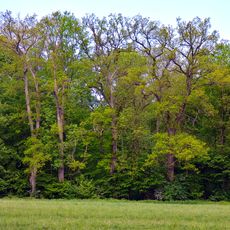
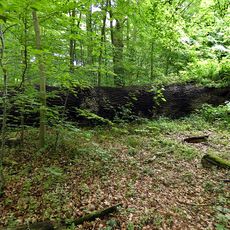
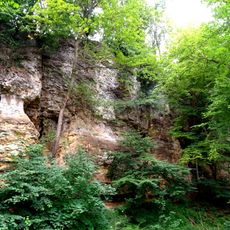
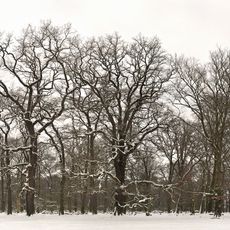
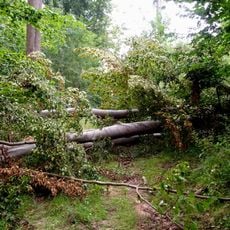
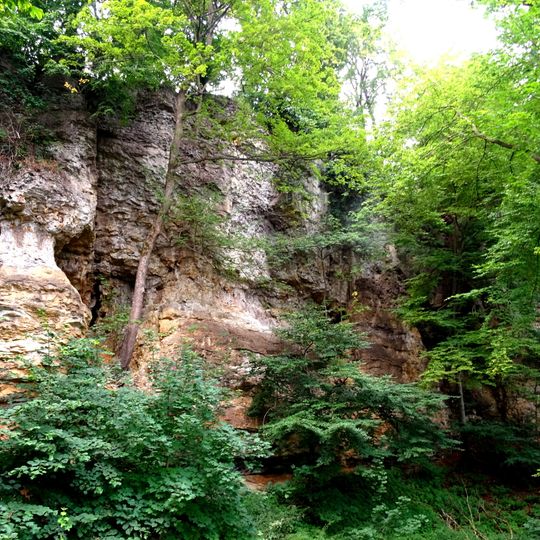
The Höhlengebiet im Kleinen Deister is a 109-hectare nature reserve on the northeast-facing slopes of the Kleiner Deister, a ridge in the Calenberger Bergland south of Springe. It protects a roughly two-kilometer-long limestone cliff edge where caves have formed. The woods are mostly woodruff beech forest, with sycamore, Norway maple, wych elm and large-leaved lime on rocky slopes, and the herb layer includes ramsons, hollowroot and wood anemone.
The reserve was designated on 14 December 2018 under code NSG HA 244, replacing the earlier Saupark reserve within whose boundaries it lies, and it is fully surrounded by that larger protected area. It sits inside the historic Saupark hunting grounds on the Kleiner Deister. The Hallermundskopf, with the remains of Hallermund Castle, lies within the reserve.
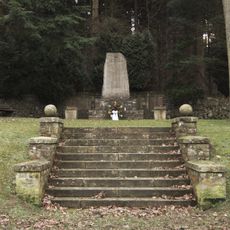
Parts of the area carry names linked to former settlements and fortifications, showing how people have long been connected to this landscape. Visitors today can still observe traces of these historical ties while walking through the forests.
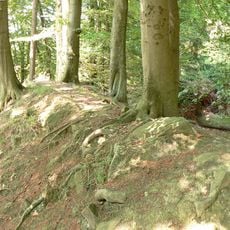
The area is accessible via natural pathways through beech forests and along limestone cliffs without major obstacles for regular hikers. Spring through fall offers the best visiting conditions, when the paths are dry and vegetation is easy to observe.
The limestone caves shelter seven bat species, including the greater mouse-eared bat, pond bat, Daubenton's bat, and both lesser and greater mouse-eared bats. The cliffs also host a breeding pair of eagle owls, and the reserve is home to wildcats and black woodpeckers.
The community of curious travelers
AroundUs brings together thousands of curated places, local tips, and hidden gems, enriched daily by 94,658 contributors worldwide.