Gräberfeld von Gevensleben, Early Christian burial ground in Helmstedt district, Germany.
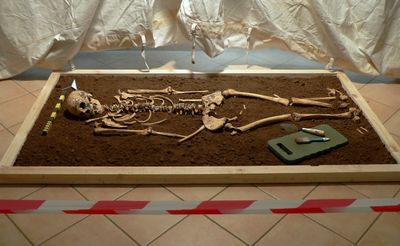
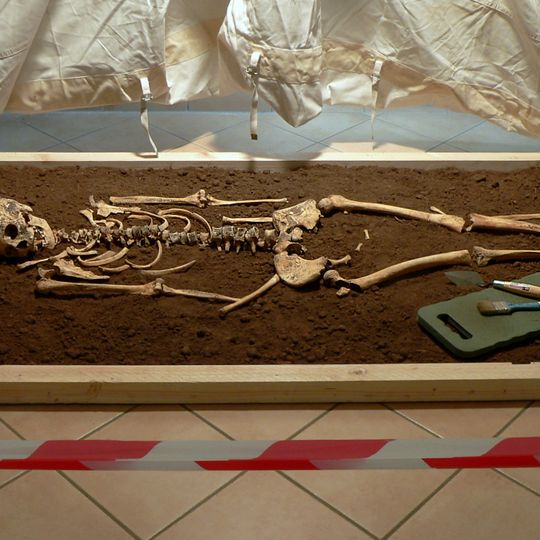
Gräberfeld von Gevensleben is an early Christian row-grave cemetery in Gevensleben, Helmstedt District, excavated in 2016 over about 400 m². More than 50 graves were uncovered, cut into yellowish loess; the dead lay stretched on their backs, mostly oriented west-east with the head to the west. Only a few graves held wooden remains of a coffin or burial board.
The burial ground began around 695 and remained in use for about 170 years, marking a period when the region shifted from pagan to Christian practices. The cemetery records this religious transformation in the historical territory of Eastphalia.
The graves reveal differences between ordinary and wealthier burials through the types of objects placed with the dead. Knives, belt buckles, and jewelry show how people were laid to rest according to their social standing.
The site is located in a rural area and is best reached by local transportation or car. Visitors should wear sturdy shoes and check ahead about current access conditions before planning a visit.
The richest grave held a woman aged 40 to 50 with a knife, a necklace of almost 20 coloured glass beads and a silver earring. A man of about 40 was buried with an iron staff spike once fixed to a wooden staff; such staffs may have marked an office or served as a walking stick.
The community of curious travelers
AroundUs brings together thousands of curated places, local tips, and hidden gems, enriched daily by 93,507 contributors worldwide.