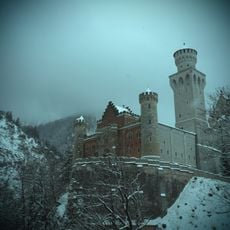
Frauenstein, Medieval castle ruins in Schwangau, Germany.
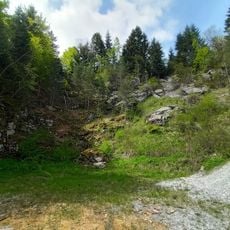
Frauenstein is a ruined hilltop castle on the eastern spur of the Perzenkopf at about 892 metres above sea level, overlooking the Alpsee near Schwangau. A neck ditch up to four metres deep cuts the castle site from the plateau, and foundation traces on the core mound indicate a rectangular residential tower or hall. About 250 metres south, foundations of a rectangular building are visible on a knoll.
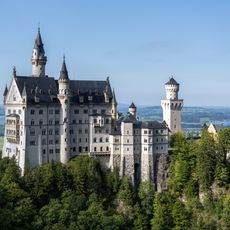
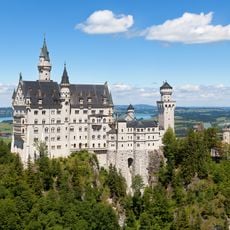
The 'castrum Frawenstein' first appears in written records in 1290. It was the westernmost of four castles held by the Lords of Schwangau, who had risen to imperial ministerial status in the service of the Welfs and Staufers. The castle was probably built as an additional stronghold during disputes between the Counts of Tyrol, the Bishops of Augsburg and the Dukes of Bavaria over the Staufer inheritance in the Allgäu. It is last mentioned in documents in 1487 and was demolished in the late 15th century, its stone reused for the Sinwell Tower of nearby Schwanstein Castle.
Frauenstein was the westernmost of four castles held by the Lords of Schwangau, who rose from service to the Welfs and Staufers to imperial ministerials. The branches of the family quarrelled over inheritances, leading to a castle peace treaty in the 15th century. Late medieval sources claim some Schwangau lords supplemented their income by raiding trade caravans.
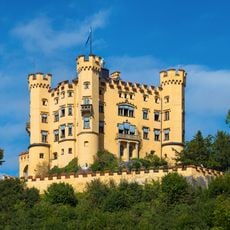
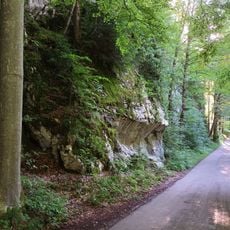
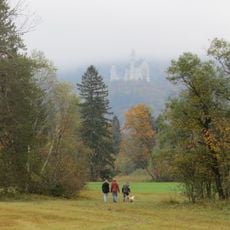
The archaeological remains are reachable from Hohenschwangau Castle via a marked hiking trail approximately 15 minutes' walk away. The path crosses wooded terrain and rocky ground, so sturdy footwear is advisable.
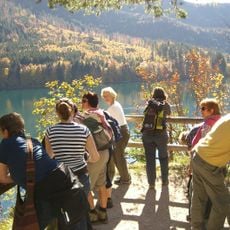
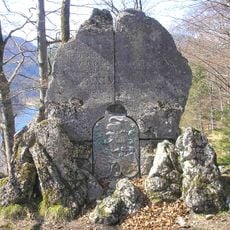
Around 1850, King Maximilian II had a memorial stone erected at the main castle and the summit reshaped into a viewpoint over the Alpsee and the two royal palaces. Dense woodland now blocks most of that panorama. The Bavarian heritage office lists the site as monument D-7-8430-0026.
The community of curious travelers
AroundUs brings together thousands of curated places, local tips, and hidden gems, enriched daily by 92,853 contributors worldwide.