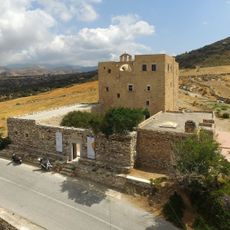
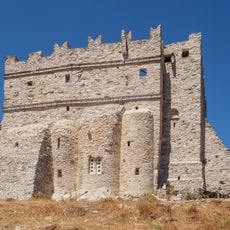
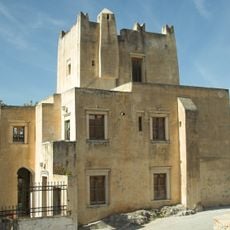
Cheimarrou Tower, Hellenistic circular tower in southeastern Naxos, Greece
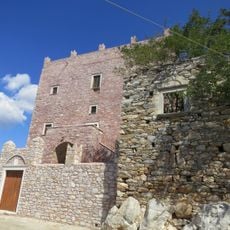
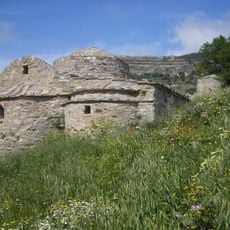
Cheimarrou Tower is a circular marble defensive structure on the island of Naxos. The structure features a square outer wall, arrow slits for defense, and an entrance door on the southern side.
The tower was built in the late 4th or early 3rd century BCE, as modern scholars date it from its masonry. Its purpose is debated: too small for a fortress, it is most often identified as a beacon station (fryktoria) relaying fire or smoke signals to other towers of Naxos and the neighbouring islands. A first description was published by the German archaeologist Ludwig Ross, who visited Naxos in the early 1830s.
The tower's purpose is debated: too small for a fortress, its arrow slits still point to defence, and locals may have sheltered here from pirates. Iakovos Dragatsis and Georgios Dimitrokallis argued it was a fryktoria, a watch-post signalling by fire or smoke to other towers on Naxos and neighbouring islands.
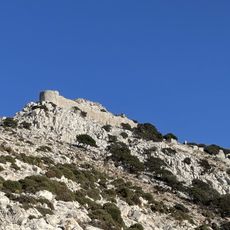
The tower stands on a rise between two streams, Cheimarros to the east and Petronia to the west, roughly halfway between Filoti and Kalandos. Access is easy because it lies beside the road to Kalandos, about 14 km from Filoti. The single door is on the south side, and the collapsed floors are visible only as beam sockets in the walls.
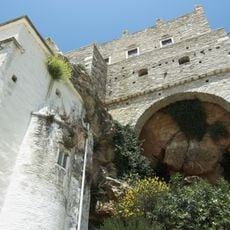
The site was built directly above a marble quarry whose stone provided the building materials. This location reveals how the Greeks cleverly used their resources and placed construction sites near their stone sources.
The community of curious travelers
AroundUs brings together thousands of curated places, local tips, and hidden gems, enriched daily by 92,893 contributors worldwide.