Archaeological Museum of Beroea, Archaeological museum in Veroia, Greece.
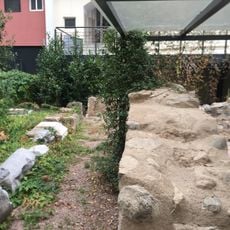
The Archaeological Museum of Veroia opened in 1965 in a purpose-built building in the Elia district. Its three halls present finds from the Palaeolithic to the Ottoman period, including a reconstruction of a rock-cut Hellenistic family tomb. Dozens of sarcophagi, stelai and statues stand in the garden, among them a 2nd-century BC Medusa head.
The museum preserves artifacts from Nea Nikomedeia, one of the oldest continuously inhabited human settlements documented in Neolithic Europe. These finds provide evidence of some of the earliest permanent dwelling sites on the continent.
The second hall holds the stela bearing the Gymnasiarch's Law, which sets out how middle and senior education ran in the gymnasium of Veroia, alongside the stelai of Paterinos Antigonou and Adea Kassandrou. A hunter-and-boar group from a third-century BC grave monument at Vergina shows the sculpture that decorated Macedonian tombs.
The museum stands in the Elia district of Veroia, in Imathia, Central Macedonia. Its three halls follow a chronological order from the Neolithic to the Roman period, so a visit runs in sequence. After the 2020-2021 renovations, the garden artefacts were moved onto a newly built wall for easier viewing.
The museum holds an inscribed bust of the river god Olganos from the 2nd century AD, a rare representation of a local deity. A bronze water jug from the 4th century BC demonstrates the skilled craftsmanship of that era.
The community of curious travelers
AroundUs brings together thousands of curated places, local tips, and hidden gems, enriched daily by 94,018 contributors worldwide.