Bois de Vincennes, Urban park and forest in 12th arrondissement, Paris, France
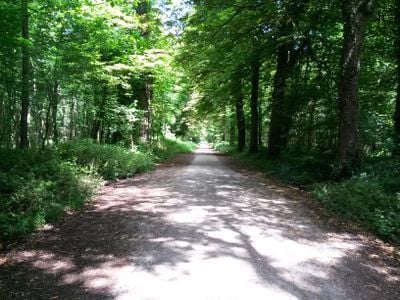
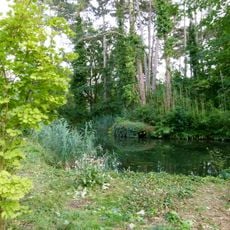
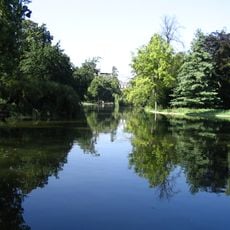
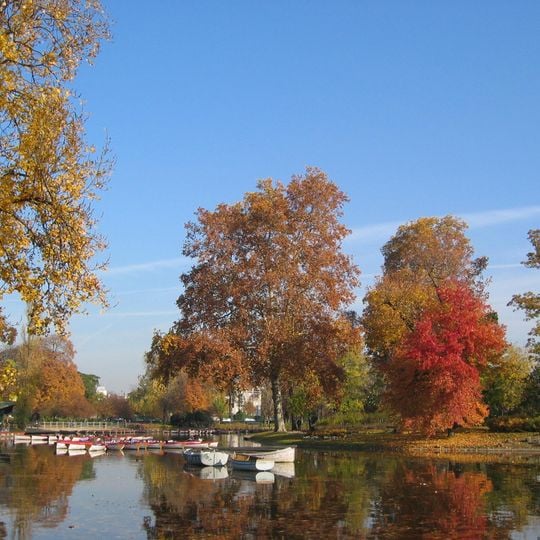
The Bois de Vincennes covers 995 hectares on a sandy plateau at Paris's eastern edge, next to the Château de Vincennes. Adolphe Alphand dug its four artificial lakes between 1855 and 1866, cementing the beds; the Gravelle lake, on the highest point, feeds the others through streams. A pale dirt path runs between dense undergrowth and tall trunks, and small white boats line the bank of one lake.
The area served as a royal hunting forest starting in the 12th century for French kings. In the 19th century, it was transformed into a public park under Napoleon III to beautify the city and provide public access to nature.
The name Vilcena, used for the forest in Roman times, survives in the park's name. The Minimes monks who lived here are remembered by the Lac des Minimes. A pyramid-shaped monument built in 1731 still marks where the two main alleys cross.
The park forms an unbuilt spur of the 12th arrondissement, cut off from the rest of the district by the boulevard périphérique trench; seven communes border its edge, including Vincennes to the north and Saint-Mandé to the northwest. It measures about 5 km east to west and 3 km north to south, so walking between the four lakes takes time. The lakes and streams are artificial, dug under Adolphe Alphand and cemented to hold water.
The park supports hundreds of plant and animal species, many rarely seen elsewhere in the city, creating an unexpected wildlife refuge within urban surroundings. This biological diversity makes it one of Paris's most important natural reservoirs.
The community of curious travelers
AroundUs brings together thousands of curated places, local tips, and hidden gems, enriched daily by 92,859 contributors worldwide.