Saint-Michel-de-Cuxa, Benedictine abbey in Codalet, France
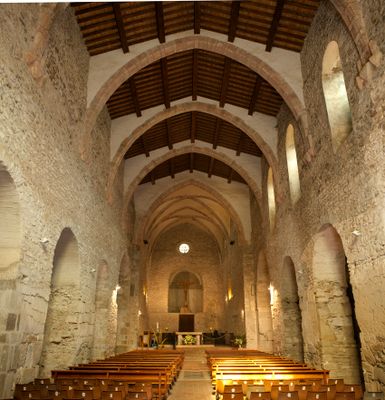
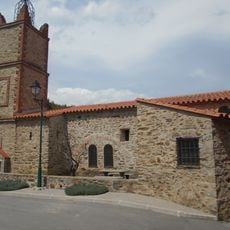
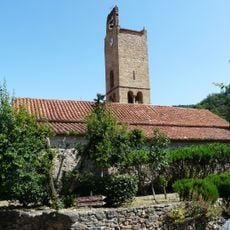
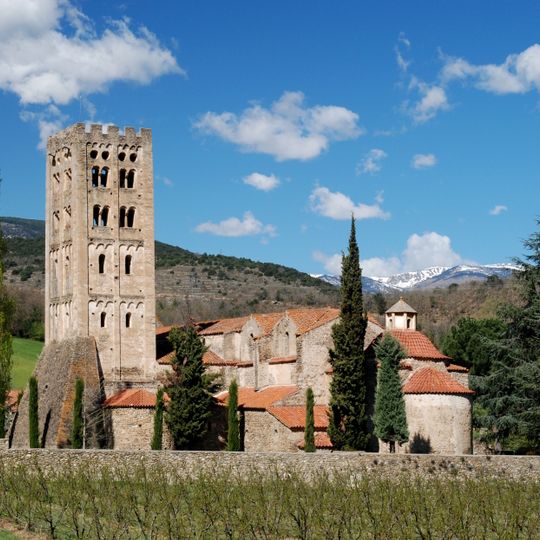
Saint-Michel-de-Cuxa is a Benedictine abbey in Codalet, at the foot of Mount Canigou. Its church, consecrated in 975, is one of the oldest pre-Romanesque buildings in the region. The complex includes a tall square tower of pale tan stone with rows of arched openings, lower buildings with rough stone walls and terracotta-tiled roofs, and a small square lantern tower. Inside, a long hall has a high wooden roof supported by stone arches, with a stone apse at the far end.
The abbey was founded in 878 after floods destroyed the original monastery of Saint-André d'Eixalada. Surviving monks established this new religious settlement in the Cuxa valley.
The Catalan name Sant Miquel de Cuixà links the archangel Michael to the valley; locals pronounce it [kuˈʃa]. The 12th-century marble cloister, built under Abbot Grégoire (1130–1143), later archbishop of Tarragona, marks the birth of Roussillon Romanesque sculpture. Much of that cloister is now at The Cloisters museum in New York.
Visitors can join guided tours offered in multiple languages including French, German, English, Catalan, Spanish, and Italian. Discounted admission is available for students and younger visitors.
The Pablo Casals Festival happens every year at the abbey, continuing a musical tradition that started in 1950 when the cellist first performed there. This artistic connection makes the place an important center for classical music in the region.
The community of curious travelers
AroundUs brings together thousands of curated places, local tips, and hidden gems, enriched daily by 93,154 contributors worldwide.