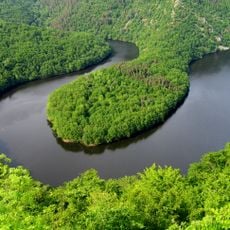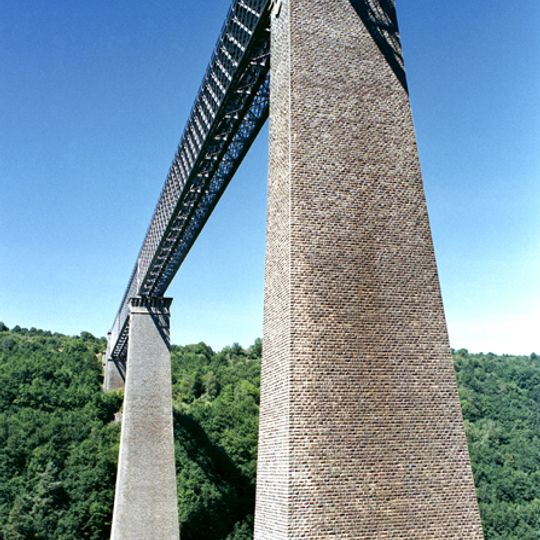
Fades Viaduct, Railway bridge in Sauret-Besserve and Les Ancizes-Comps, France.
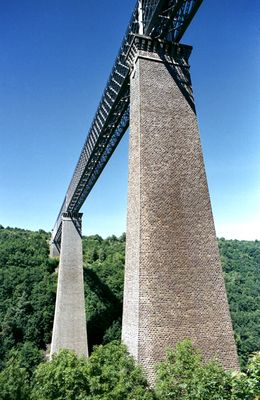
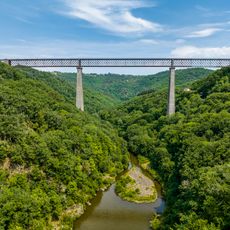
Fades Viaduct is a railway viaduct over the Sioule between Sauret-Besserve and Les Ancizes-Comps. Its two hollow granite piers, built of small quarried blocks, rise more than 92 m and each has a base larger than a tennis court. A dark steel truss of crisscrossing bars, with side spans of 116 m and a central span of 144 m, carries the deck.
Construction began in 1901 and finished in 1909, immediately establishing this bridge as the world's tallest at that time. This achievement demonstrated France's advanced engineering capabilities and ambitions for expanding its railway network across difficult terrain.
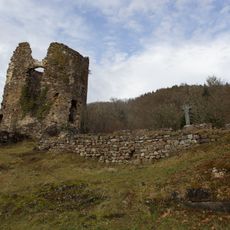
The name comes from the Occitan fada, "fairy". A local tale tells of two unmarried sisters who ran a mill at the bottom of the valley and spent their life savings on a small bridge over the Sioule to help travellers; neighbours called it the pont des Fadas, and the name passed to the place and then to the viaduct. The writer Benezet Vidal recorded the legend in his Occitan novel Jan Combralha.
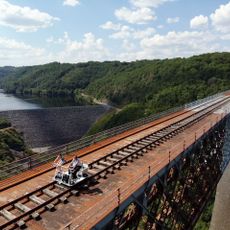
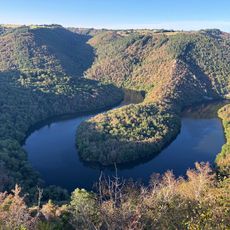
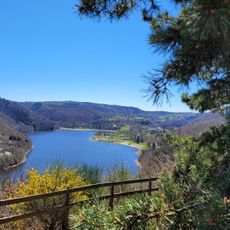
The line was suspended on 9 December 2007 and is now a neutralised, closed line, so the deck cannot be crossed. Views are from the valley of the Sioule and the surrounding Combrailles plateau; the structure stands between Sauret-Besserve and Les Ancizes-Comps, in the Puy-de-Dôme.
The two granite piers are hollow: workers reached the rising courses from inside, hoisted by a lift, so no scaffolding was needed. Each pier's base covers more ground than a tennis court, and at over 92 metres they remain the tallest piers ever built in traditional masonry.
The community of curious travelers
AroundUs brings together thousands of curated places, local tips, and hidden gems, enriched daily by 94,657 contributors worldwide.