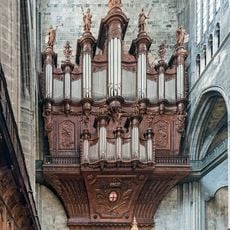
Narbonne Cathedral, Gothic cathedral in Narbonne, France.
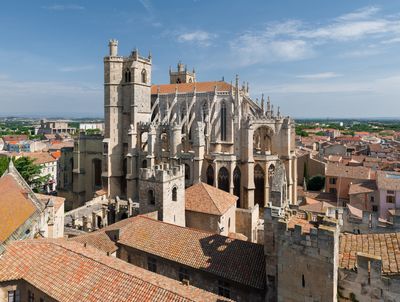
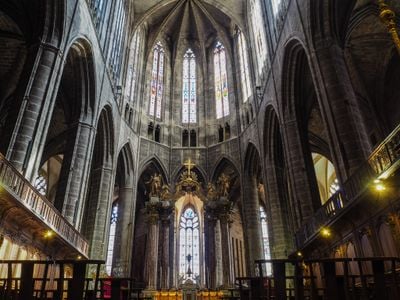
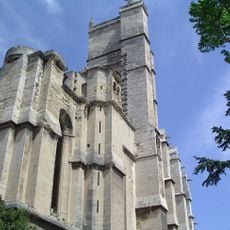
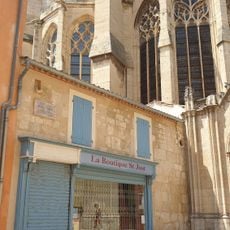
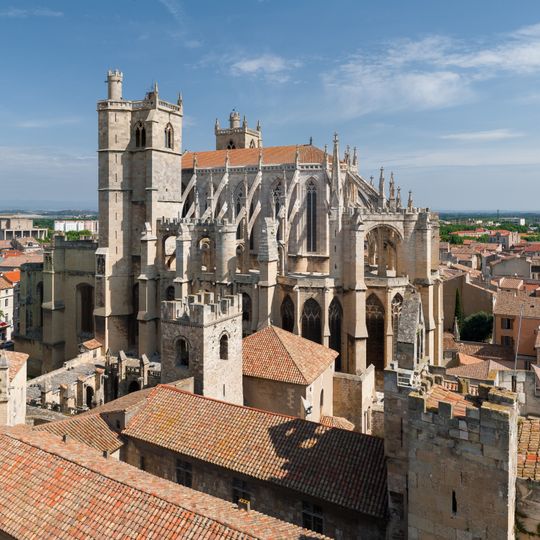
Narbonne Cathedral, dedicated to Saints Justus and Pastor, is a southern Gothic building begun in 1272 and left unfinished: only the choir and its flanking chapels stand, with no nave or transept. Its vaults rise 41 metres, the fourth highest in France. Pale beige stone, a square tower with an octagonal turret, red terracotta roof tiles, flying buttresses and tall pointed windows with dark tracery define the exterior; inside, ribbed vaults converge over an altar with a golden altarpiece and stained glass in blue, red and white.
Construction started in 1272, but the city refused to tear down its walls for necessary building materials, leaving the project unfinished. This incompleteness remains a defining feature of the building today.
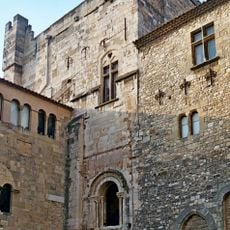
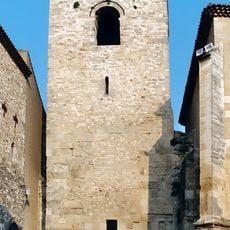
The cathedral is dedicated to Saints Justus and Pastor, two young Spanish martyrs; it was re-dedicated to them in 782, replacing an earlier dedication to Saint Genesius. Two Roman columns from the former forum, reused in the nave, are now visible in the cloister, and the 9th-century steeple of Archbishop Theodard, largely restored, can also be seen from there.
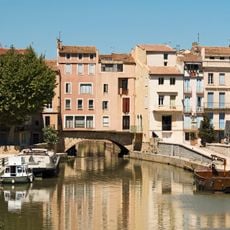
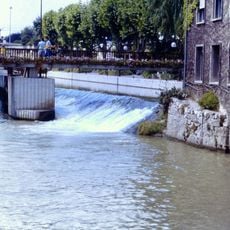
The cathedral stands in the heart of Narbonne, near the Canal de la Robine; the cloister and the adjoining archaeological sites are separate classified areas reached from the same block. The choir is the only completed part, so the visit is short: the 41 m vaults, the 15.20 m-wide central vessel and the 60 m-long choir can be seen in one pass. The 9th-century Tower of Theodard, largely restored, is visible from the cloister.
The Gothic choir was meant to be only the transept crossing of a much larger Latin-cross church. The city walls stood too close to allow the nave to be built, so the project stopped after 1354 and the choir, finished in 1332, has served as the whole church ever since.
The community of curious travelers
AroundUs brings together thousands of curated places, local tips, and hidden gems, enriched daily by 94,460 contributors worldwide.