CMS experiment, Particle physics detector in Cessy, France
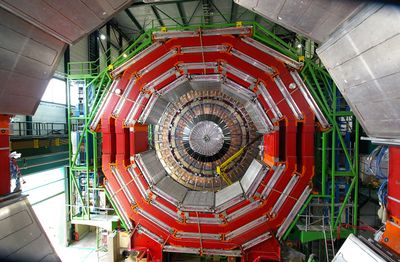
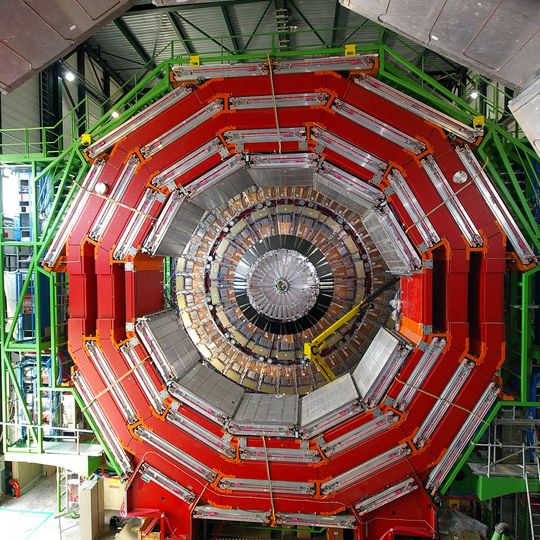
The CMS experiment is a large underground detector near Cessy that measures and analyzes particle collisions. It consists of multiple layers of different sensors working together to capture and track the particles created in these high-energy events.
Scientists built this detector between 1998 and 2007 to study the smallest particles in nature. It played a crucial role in 2012 when researchers announced the discovery of a long-sought particle that transformed our understanding of matter.
The name "Compact Muon Solenoid" reflects how this instrument captures muons and other particles produced in collisions. Researchers from around the world share their findings here, making it a place where science transcends borders.
The detector sits in an underground cavern more than 100 meters (330 feet) below ground, where it is shielded from external interference. Visitors can explore the facility, though access to the actual detector is limited to authorized groups.
The entire device weighs around 14,000 tonnes and was assembled in 15 sections before being lowered piece by piece into the underground chamber. This extraordinary assembly method made it possible to install such a massive instrument at this location.
The community of curious travelers
AroundUs brings together thousands of curated places, local tips, and hidden gems, enriched daily by 92,421 contributors worldwide.