Aquitaine Basin, Sedimentary basin in southwestern France
The Aquitaine Basin is a 66,000 km² foreland basin in southwestern France, shaped like a funnel opening 330 km onto the Atlantic coast. The 2,000 m isobath roughly follows the Garonne, dividing a shallow, gently faulted northern Aquitaine Plateau from a deeper, folded southern region. Its deepest point, 11,000 m, lies just in front of the North Pyrenean Thrust.
Sedimentation began in the Lower Triassic near the North Pyrenean Thrust with coloured sandstones and mudstones, then spread slowly north. Middle Triassic dolomitic limestones and evaporites followed, and Upper Triassic evaporites were capped by ophitic lava flows. During the Pyrenean orogeny these evaporites rose as diapirs, and the mudstones became decollement horizons along which Triassic sediments were pushed north to the Arcachon–Toulouse line.
The basin takes its name from Aquitaine, a region and a duchy older than the geological term. Its funnel shape opens toward the Atlantic over 330 km, and the 2,000 m isobath roughly follows the Garonne, dividing a shallow northern plateau from a deeper, folded south.
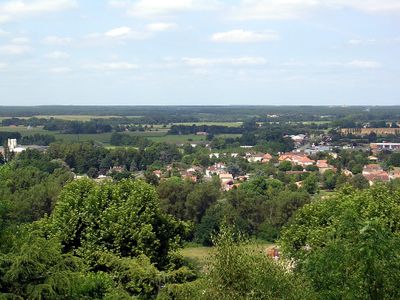
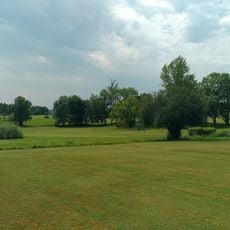
The basin is well connected by highway networks that link towns and rural areas across the region. The flat terrain makes travel and navigation straightforward for visitors moving through the landscape.
The basin's deepest point lies at 11,000 metres, close to the North Pyrenean Thrust, where the basement is buried under that thickness of sediment. The Parentis Basin, a symmetrical sub-basin extending into the Golfe de Gascogne, also reaches 11 km and comes ashore near Arcachon.
The community of curious travelers
AroundUs brings together thousands of curated places, local tips, and hidden gems, enriched daily by 94,485 contributors worldwide.