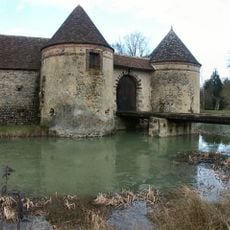
La Trappe, Trappist monastery in Soligny-la-Trappe, France
La Trappe Abbey is a monastery in Soligny-la-Trappe whose present buildings, rebuilt around 1890 in Neo-Gothic style, stand beside ponds the monks dug along the Itonne. The pale stone church tower rises above the adjoining wings, and the church itself is oriented north-east rather than toward the east. Only a few 17th-century structures in the first entrance courtyard and the 13th-century guest hall survive from earlier campaigns.
La Trappe began in 1122 as an oratory built by Rotrou III, Count of Perche, in memory of his wife Matilda, who drowned in the White Ship disaster of 1120. Monks from Le Breuil-Benoît settled beside it on 10 September 1140, and the house became an abbey that year; in 1147 it joined the Cistercian order. Armand Jean Le Bouthillier de Rancé, commendatory abbot from 1662, made it the centre of the Strict Observance reform. The church was rebuilt and consecrated on 30 August 1895 under abbot Dom Etienne Salasc.
The name "Trappist" comes from this abbey: Armand Jean Le Bouthillier de Rancé, its commendatory abbot from 1662, imposed a stricter reading of the Cistercian rule from 1664, and the reform was called the Strict Observance before taking the abbey's name. The community still lives by that rule today, and the monks announced in March 2026 that they may leave the site in 2028 for lack of vocations.
The abbey stands in the valley of the Itonne at Soligny-la-Trappe, reached from Mortagne, about 9 miles away. The church is oriented north-east rather than east, so the tower and spire are seen from the entrance path beside the lawn. Only the 13th-century guest hall and some 17th-century buildings in the first courtyard survive from before the 1890s reconstruction.
The abbey church is oriented about sixty degrees toward the north-east rather than the usual east, and the monks dug the chain of ponds along the Itonne that border the site to the east and south. The name Trappe most likely comes from the German Treppe, "staircase", rather than from the water plant Trapa natans, which does not grow in the Perche.
The community of curious travelers
AroundUs brings together thousands of curated places, local tips, and hidden gems, enriched daily by 94,657 contributors worldwide.