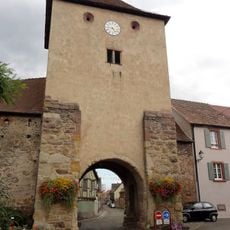
Château du Hohlandsbourg, Medieval castle in Wintzenheim, France.
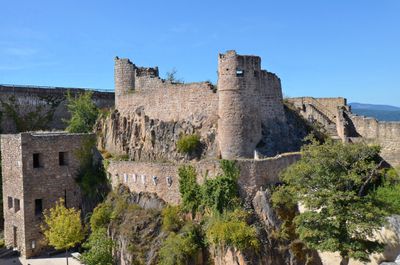
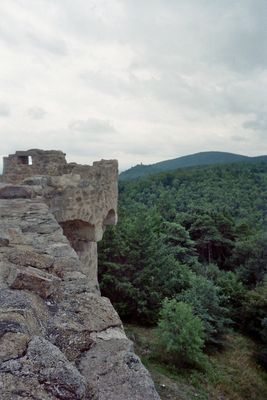
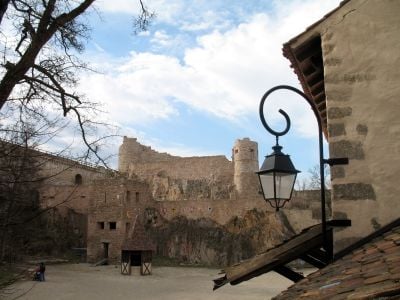
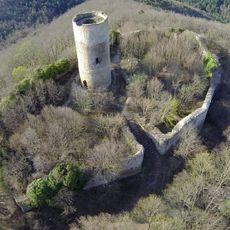
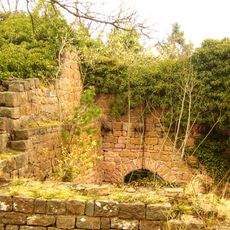
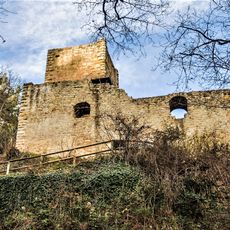
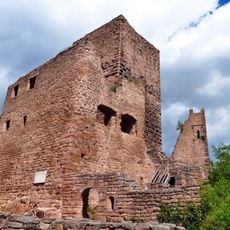
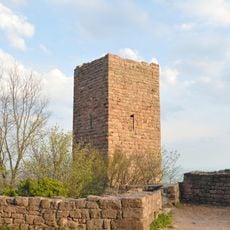
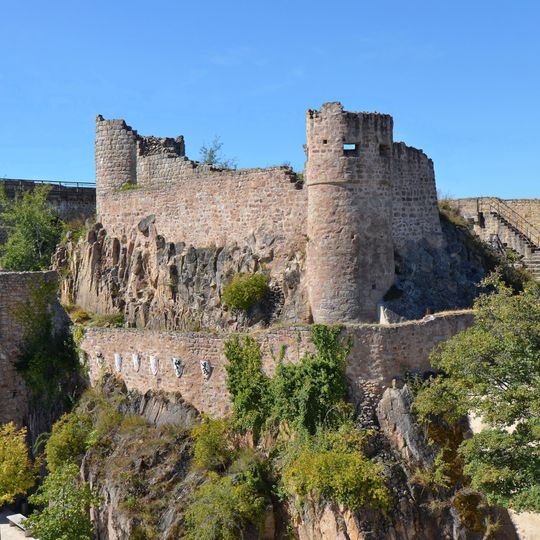
Château du Hohlandsbourg is a medieval hilltop castle in the Alsace region of France, overlooking the vineyards and plains below. The site includes a large open courtyard, thick stone walls, round towers, and several covered rooms that visitors can enter.
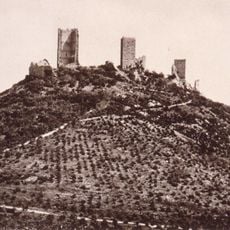
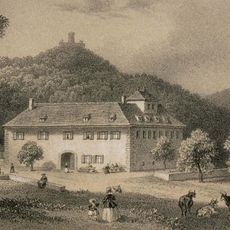
Sigfrid of Gundolsheim, schultheiss of Colmar, obtained royal permission on 2 February 1279 to build the castle; it passed to the Habsburgs by 1289. Sold in 1410 to the Lupfen and in 1563 to Lazarus von Schwendi, it was modernised for artillery before being dismantled by French troops in 1637. Classified as a monument historique in 1840, it was largely abandoned until a tourist development project began in 1986.
The castle has served as a setting for cultural events since its restoration from 1985 under the Département du Haut-Rhin. Its name comes from the Habsburgs, who held it from 1281 and gave it to the counts of Lupfen as a fief in 1410. Lazarus von Schwendi, adviser to emperors Charles V and Maximilian II, acquired castle and lordship in 1563 and had it modernised.
The castle is reached by a short footpath from a car park on the Route des cinq châteaux. Access is on the north side, through a pentagonal bastion built under Lazarus von Schwendi. The site is open from Easter to mid-November and charges an entrance fee.
The lower bailey is not round but a near-rectangular enclosure of 96 by 66 metres, ringed by a walkable wall up to 14 metres high and more than two metres thick, with tourelles and oriel defences. The pentagonal bastion guarding the north entrance dates from the modernisation under Lazarus von Schwendi after 1563.
The community of curious travelers
AroundUs brings together thousands of curated places, local tips, and hidden gems, enriched daily by 94,162 contributors worldwide.