Verdun-sur-le-Doubs, Former commune in Saône-et-Loire, France
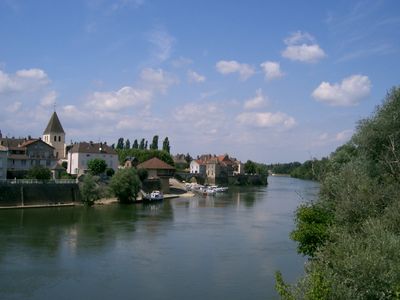
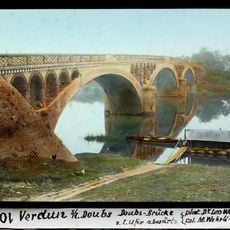
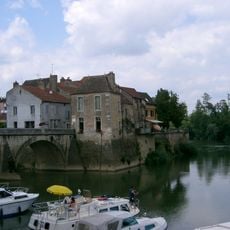
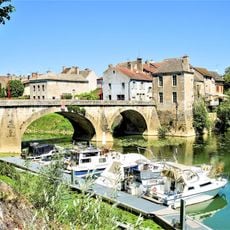
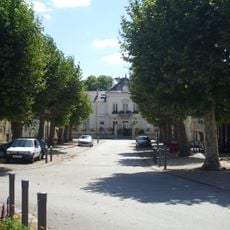
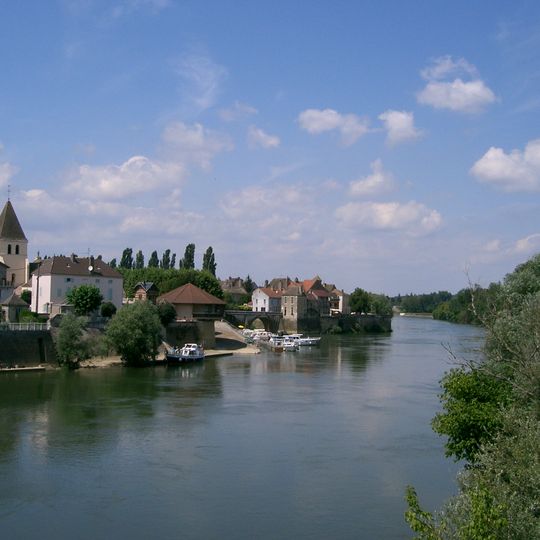
Verdun-sur-le-Doubs is a small town in Saône-et-Loire, eastern France, sitting at the point where the Doubs River meets the Saône. The old quarter occupies a tongue of land surrounded by water, lined with brick houses and towers, and connected to the other bank by a stone bridge built in the early 19th century.
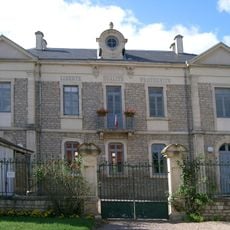
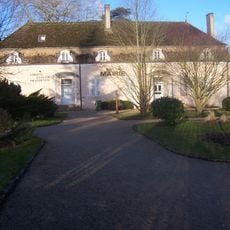
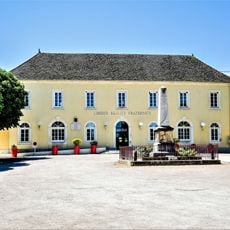
The town has roots going back to Celtic and Roman times, when its position at a river crossing made it strategically useful. Over the centuries, walls, ditches, and canals were built to fortify the site, and in 1836 the current town hall replaced what had once been a castle on the same spot.
The name Verdun-sur-le-Doubs comes from the Latin Verdunum, meaning roughly a crossing or a house on water. That connection to the river is still visible today, with the old town walls rising directly from the water's edge and daily life oriented along the banks.
The old quarter is easy to explore on foot, and the stone bridge makes a natural starting point for a walk along either riverbank. Visiting on a Thursday gives you access to the weekly market, where local farmers sell fresh produce.
In the 1930s, a local organizer named Borgeot set up what is considered the first grain cooperative in France here, a model that spread across the country. The town was also known for its tile workshops, which operated until just before World War I and supplied roofing materials across the region.
The community of curious travelers
AroundUs brings together thousands of curated places, local tips, and hidden gems, enriched daily by 92,121 contributors worldwide.