Château de Lusignan, Medieval castle ruins in Lusignan, France.
The Château de Lusignan is a ruined fortress on a narrow promontory above steep valleys. Surviving are parts of the keep, the base of the Tour Poitevine, cisterns, cellars, a stair tower in the wall, and foundations of a moutardier, with whole wall sections clinging to the cliffs.
Hugh II of Lusignan began the castle in the second half of the 10th century; Henry II Plantagenet dismantled it in 1168 and Hugh VIII rebuilt it from 1171. John, Duke of Berry, modernised it at the end of the 14th century. Henri III ordered its demolition in 1586, leaving only the Tour Mélusine until 1622, and in the 18th century the Comte de Blossac razed it for a public park.
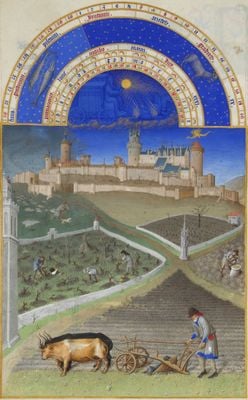
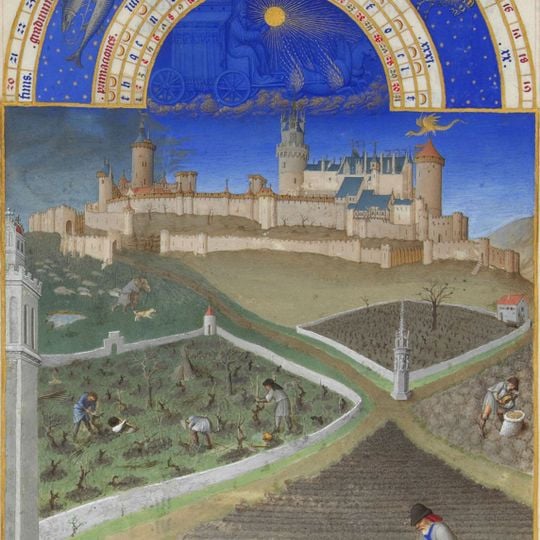
Local tradition credits the water spirit Melusine with building the castle for her husband Raymondin, and the monk Pierre Bersuire recorded around 1342–1350 that she was seen naked and turned into a serpent, said to appear whenever the castle changes lord. The Très Riches Heures of the Duke of Berry show her as a winged dragon above the Tour Poitevine.
The site lies on a narrow promontory above steep valleys, reached from the town by a lime-tree avenue leading to a terrace over the valley. Surviving wall sections cling to the cliff faces, and the ground is uneven, so wear sturdy shoes. Parts of the keep, the base of the Tour Poitevine, a cistern and the entrance to a closed underground passage remain.
The castle served as a prison for Jacques Cœur and for the future Louis XII. The section Vauban reinforced later became a prison again, then a primary school and a tourist office. The Très Riches Heures of the Duke of Berry show the castle in the March miniature, with Melusine as a winged dragon above the right-hand tower.
The community of curious travelers
AroundUs brings together thousands of curated places, local tips, and hidden gems, enriched daily by 93,412 contributors worldwide.