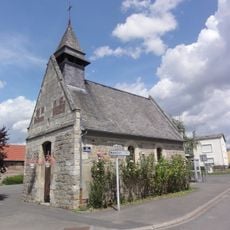
Canal de l'Oise à l'Aisne, Summit level canal in Hauts-de-France, France
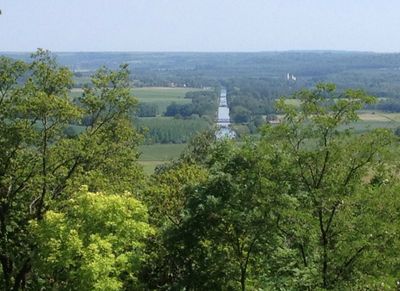
The Canal de l'Oise à l'Aisne is a summit level waterway in the Hauts-de-France region that stretches across the countryside between two major canal networks. The waterway carries boats through rural landscapes and includes several locks that manage elevation changes along its course.
Built between 1879 and 1890 under the Freycinet programme, the canal was to link the northern coalfields with eastern France, replacing a route 56 km longer. Seventeen workers died in a gas explosion during the works. In 1914, 8,000 boats used it. Damaged in the First World War, it was rebuilt with a ventilation system in the tunnel and a new metal aqueduct at Bourg-et-Comin.
The canal's name comes from the two river valleys it links, and its summit reach crosses the Chemin des Dames ridge, a battleground in the First World War. The reservoir at Monampteuil, fed by a three-kilometre channel from the Ailette, holds up to a million cubic metres of water for the canal. Today the waterway is used mainly by freight barges, with pleasure craft also navigating it.
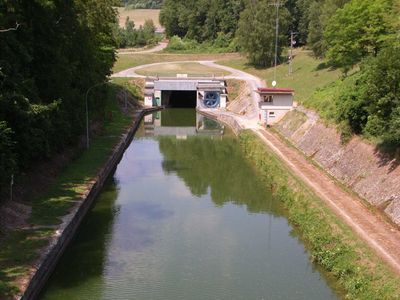
The canal runs 47.775 km from Abbécourt to Bourg-et-Comin through 13 locks, with a 2,365 m one-way tunnel at Braye-en-Laonnois under the Chemin des Dames. Boats pass the tunnel under motor power thanks to a ventilation system; the Bourg-et-Comin canal bridge is too narrow for two boats to cross. Water supply comes from the Monampteuil reservoir and a pumping station at Bourg-et-Comin.
Along its course, the route passes through a notably long tunnel that carries the water beneath a ridge of land. This engineering solution was necessary during construction to work around the difficult terrain.
The community of curious travelers
AroundUs brings together thousands of curated places, local tips, and hidden gems, enriched daily by 93,919 contributors worldwide.