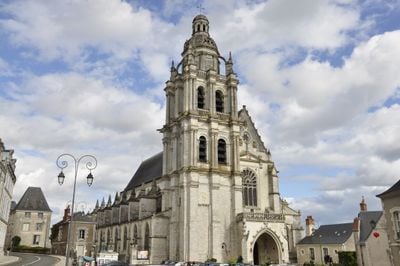
Blois Cathedral, Gothic Catholic cathedral in Blois, France
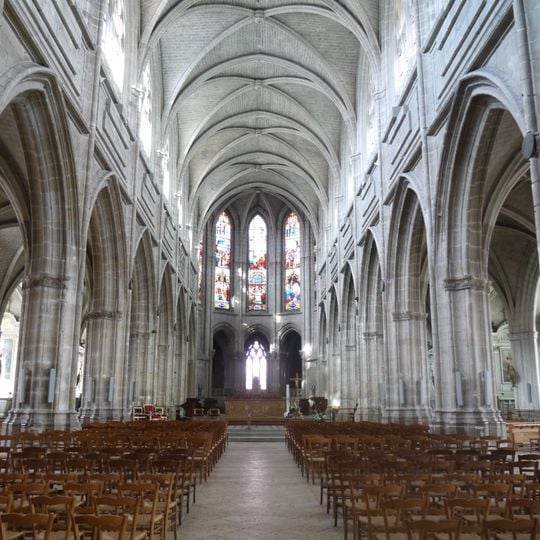
Blois Cathedral is a Late Gothic church whose west front, begun in 1544, mixes gargoyles and pinnacled buttresses with a triangular pediment and round medallions. Its bell tower stands on the north side, not over the chancel: a Renaissance tower with Ionic and Corinthian columns, paired arched openings and a dome and lantern added in 1603. Inside, a long nave with side aisles and side chapels leads to a pentagonal apse and a 19th-century ambulatory with twisted pillars.
The structure began as a collegiate church called Saint-Solenne in the 12th century and became a cathedral in 1697 when the diocese was established. This change reflected the city's growing importance as a religious center.
The cathedral keeps its medieval name of Saint-Solenne in the crypt beneath the chancel, where traces of a Carolingian church were found in 1927. The building was dedicated to Saint Louis only in 1730, after the diocese was created in 1697. In the first chapel on the right of the nave stands a marble bas-relief of the baptism of Christ, taken from the tomb of the mother of Stanislas Leszczynski, king of Poland, who died in Blois.
The cathedral is open to visitors during regular hours and serves as the active parish church for the Blois diocese. Keep in mind that hours may vary depending on services and special religious observances.
In 1704, King Louis XIV presented an organ loft to mark the elevation to cathedral status. This royal gift shows the connection between the city and the court during that period.
The community of curious travelers
AroundUs brings together thousands of curated places, local tips, and hidden gems, enriched daily by 94,453 contributors worldwide.