Ruscino, Archaeological site in Perpignan, France
Ruscino is an excavated ancient city in Perpignan that displays ruins of homes, fortification walls, and numerous objects spanning pre-Roman and Roman times. The recovered items come from different periods and provide insight into the daily life and layout of this early settlement.
Habitation on the promontory above the Têt dates to around 600 BC, when Iberians lived there by fishing, farming, ironworking and trade with the Greeks; stone buildings appear around 400 BC. The Romans refitted the Via Domitia through the site in the 2nd century BC, and a Roman town with a forum built under Augustus became the capital of the civitas of the Sordes. It declined in favour of Elne and Narbonne, possibly hastened by an earthquake in the early 2nd century, and the Vandals ruined it in 409.
The name Ruscino, probably of Phoenician origin like Barcino, passed into medieval Latin as Rosciliona and gave the Roussillon region its name. The Iberians who lived here from around 600 BC fished, farmed, worked iron and traded with the Greeks. Excavations have also yielded Neolithic serpentine pottery fragments.
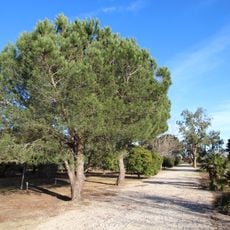
The excavated remains lie on flat ground beside the road immediately south of the village of Château-Roussillon, with the low wall bases set almost flush with the gravel and reddish earth. Visitors should watch their footing, as the outlines are easy to step over. The site is an inscribed monument historique and has been excavated since the 19th century.
The site's name survives on the first of the four Vicarello Cups, a set of silver vessels engraved with a route list that mentions Ruscinonem, and also in the Antonine Itinerary and on the Peutinger Table. The Iberians who lived here before the Romans kept grain in terracotta silos sunk into the ground, some of which have been excavated.
The community of curious travelers
AroundUs brings together thousands of curated places, local tips, and hidden gems, enriched daily by 94,657 contributors worldwide.