Château d'Haroué, French baroque castle in Haroué, France
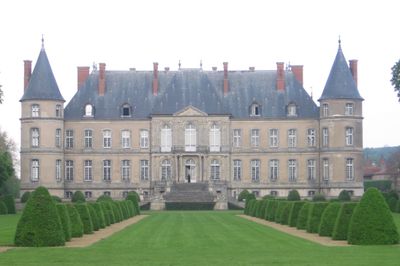
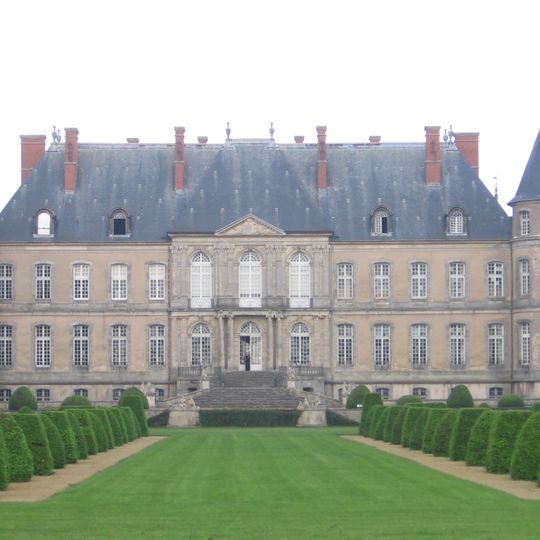
Château d'Haroué is a baroque castle set in the Saintois region of Lorraine with classical architectural forms. The structure combines formal design with practical elements including multiple towers, bridges spanning a moat, and numerous rooms arranged throughout the building.
The renowned architect Germain Boffrand designed and built the castle between 1720 and 1732 for an influential family in Lorraine. The project combined new baroque ideas with parts of an older stronghold that already stood on the site.
The name Haroué comes from the village, not a family; the château is also called château de Craon after the Beauvau-Craon princes. Lorraine artists did the decoration: Jean Lamour made the gates, balconies and the wrought-iron stair rail, Pillement painted one tower's interior, and Barthélemy Guibal, sculptor of the place Stanislas fountains in Nancy, carved the statuary.
The château stands in the centre of Haroué, in a small valley of the Saintois south of Nancy. Visitors cross the moat by one of the four bridges; the entrance front faces the village, while the French formal park and its long landscape vista lie behind the building. A partnership signed in 2021 with the Centre des monuments nationaux covers opening the visit route to the public.
Boffrand had to fold the four towers and moat of an older medieval castle into his 1720s plans, an unusual concession for a classicist architect. The design also encodes a year: 365 windows, 52 fireplaces, 12 towers and 4 bridges over the moat.
The community of curious travelers
AroundUs brings together thousands of curated places, local tips, and hidden gems, enriched daily by 95,295 contributors worldwide.